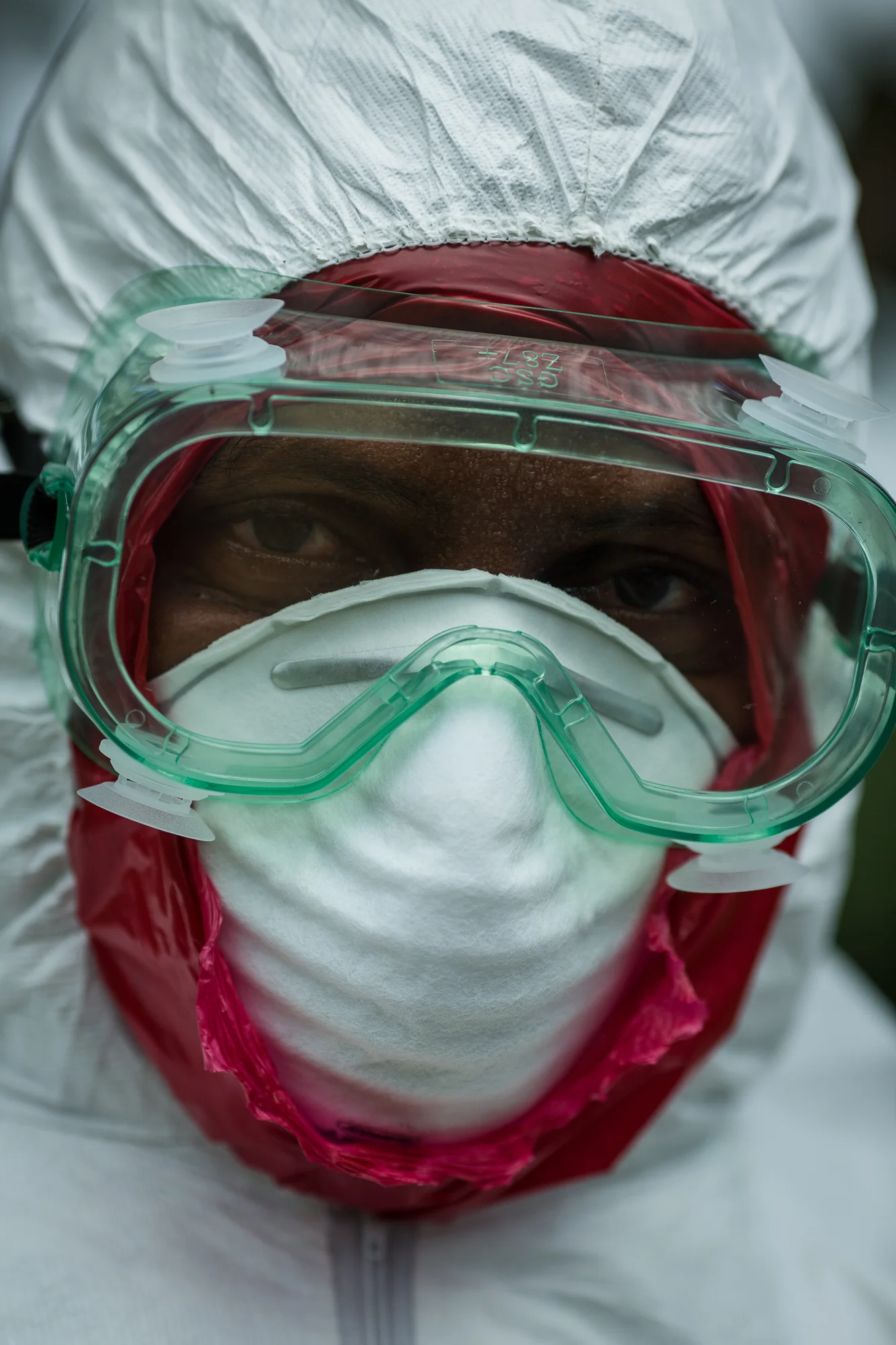
Location: Liberia
Photographer: Morgana Wingard
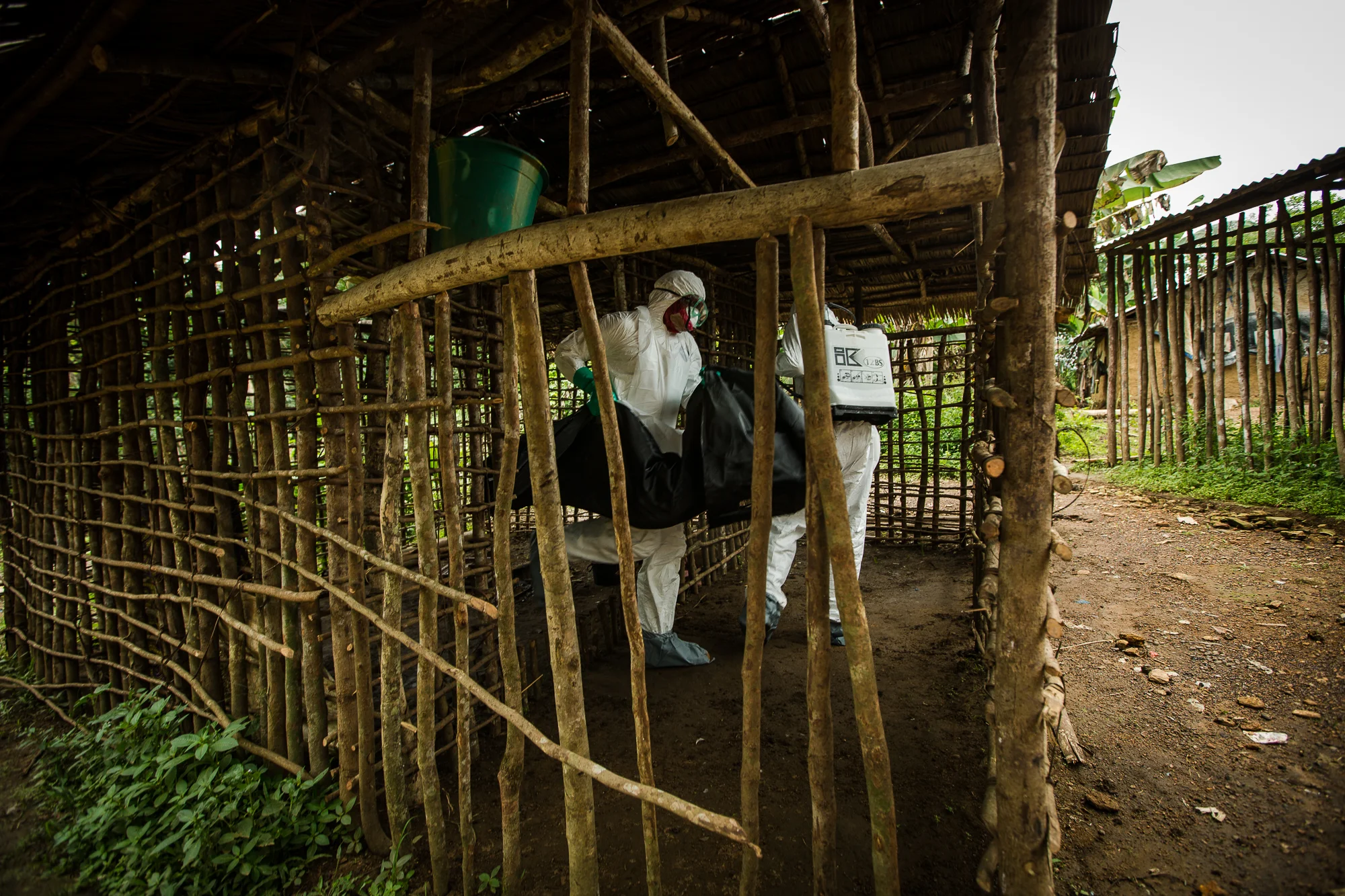
Arthington, Liberia - September 26, 2014: Melvin Payoh, Assistant Team Leader, of a Global Communities burial team removes the body of six year old Phelica Anthony, suspected to have died of Ebola, from her family home. Her father was taken to an Ebola treatment unit the day before. Photo by Morgana Wingard
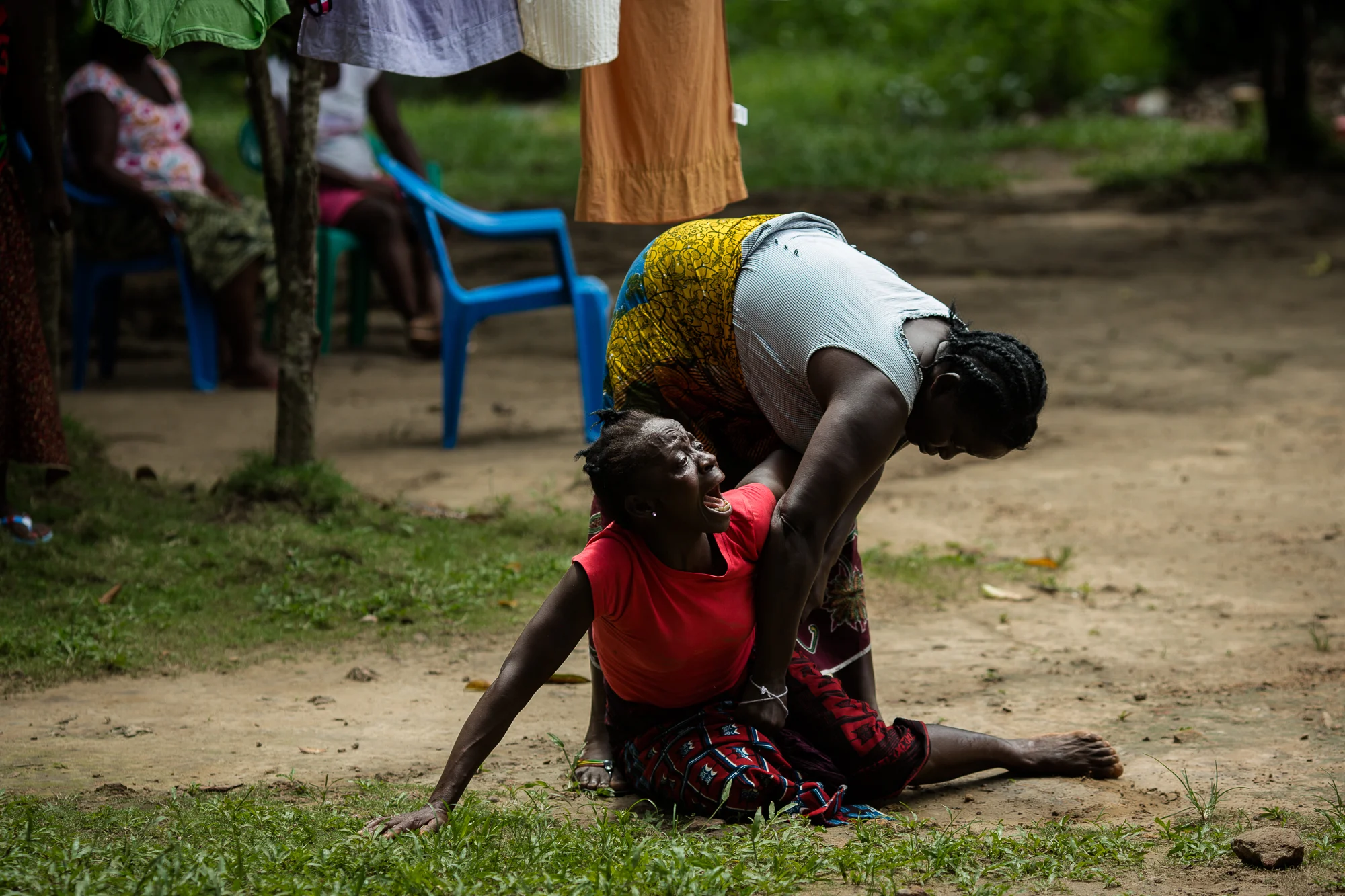
Monrovia, Liberia - September 26, 2014: A neigbhor cries as a burial team arrives to remove the body of her friend suspected to have died of Ebola. Photo by Morgana Wingard
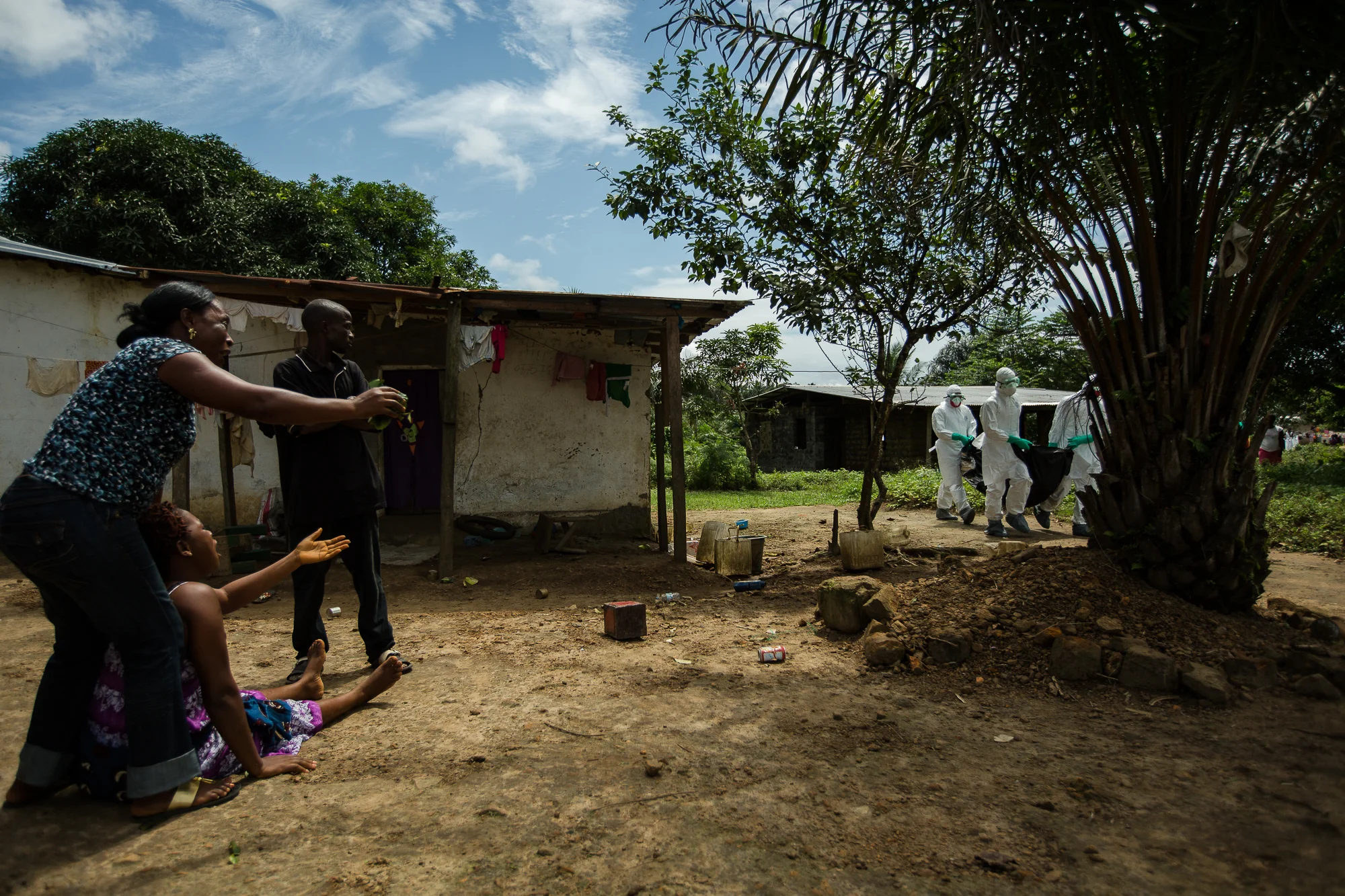
Monrovia, Liberia - September 26, 2014: Neighbors grieve as Assistant Team Leader, Melvin Payoh, and his burial team from Global Communities collect the body of a woman suspected to have died of Ebola. Photo by Morgana Wingard
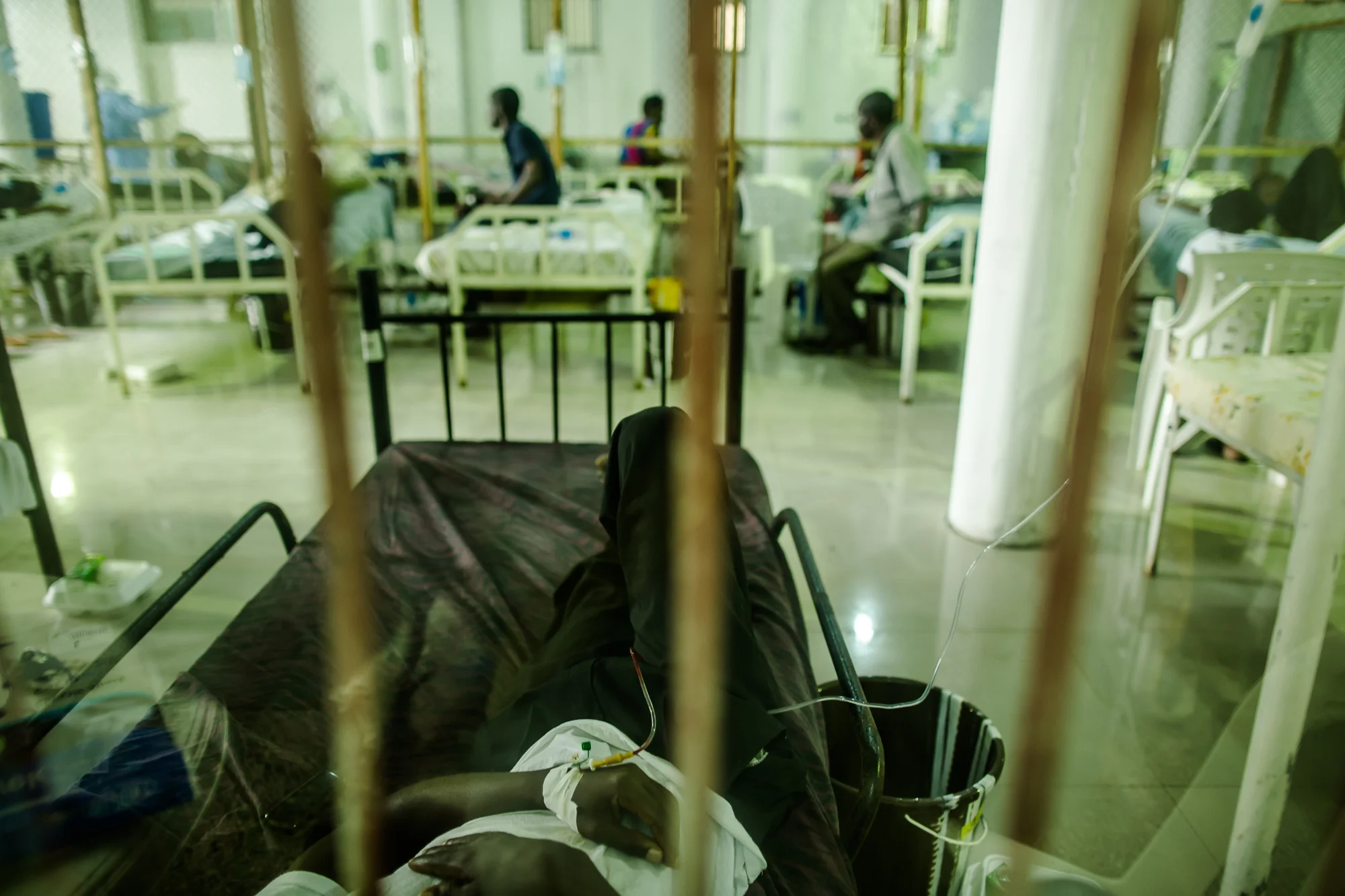
Monrovia, Liberia - September 22, 2014: A patient admitted to the Ebola treatment unit at Island Clinic resting in his bed connected to an IV. IV's were a controversial component of treatment during the outbreak because of the increased risk of infection to caregivers. Photo by Morgana Wingard
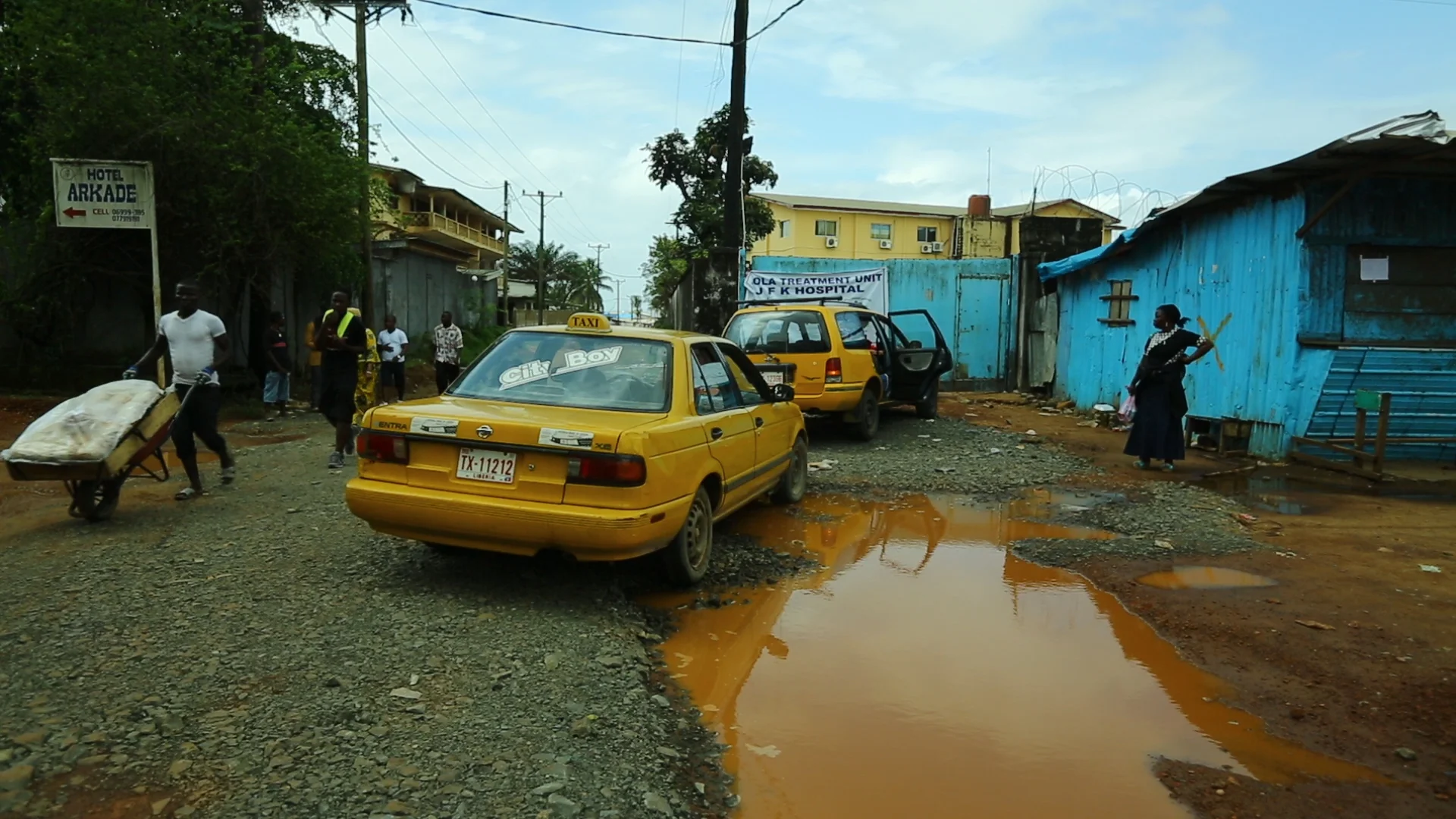
Monrovia, Liberia - Sept 15, 2014: Taxi cabs carrying Ebola patients wait outside the JFK Hospital Ebola treatment unit. Photo by Morgana Wingard
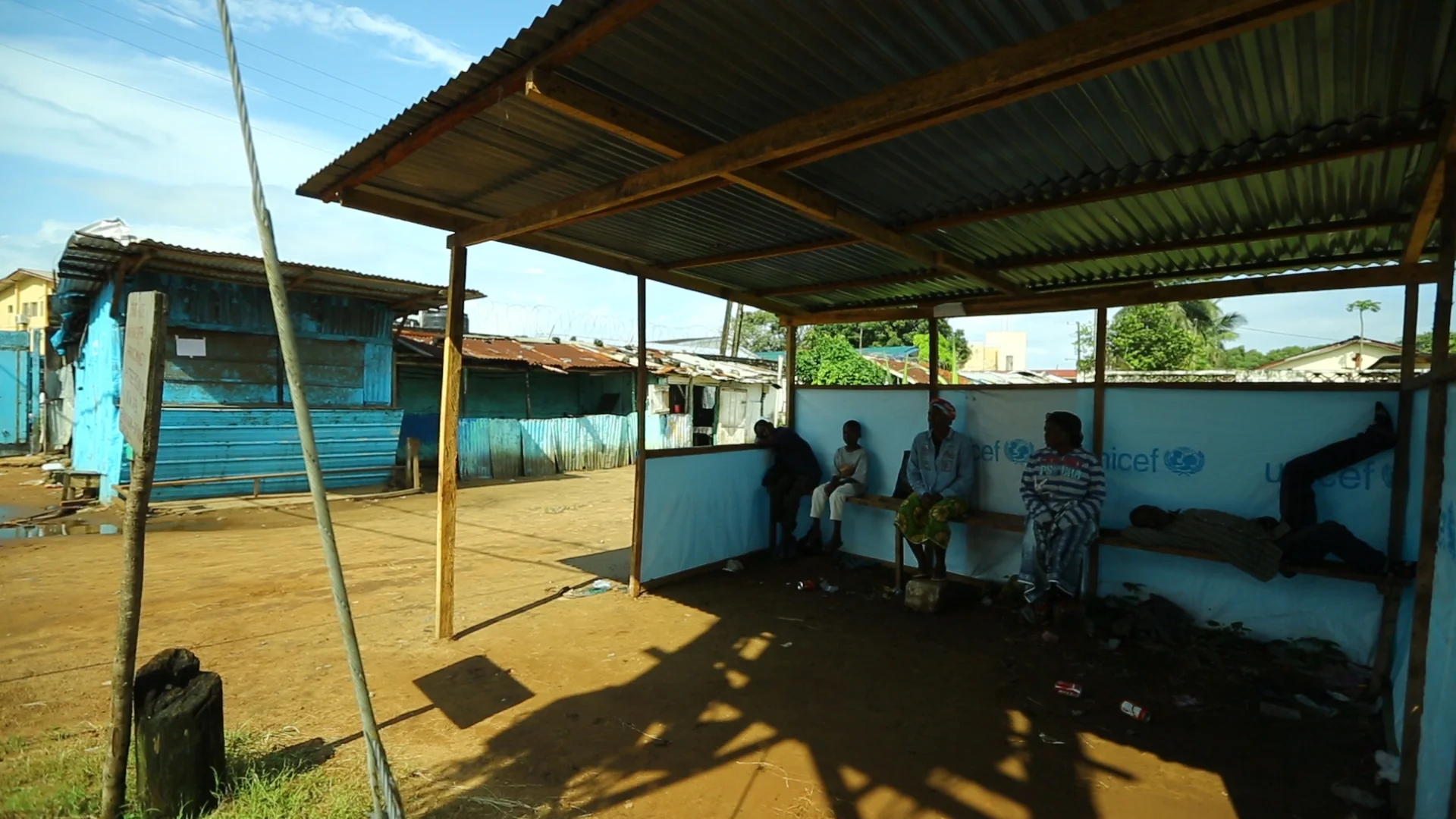
Monrovia, Liberia - Sept 15, 2014: People wait outside the Ebola treatment unit at JFK Hospital for hours in hopes of being admitted. Photo by Morgana Wingard
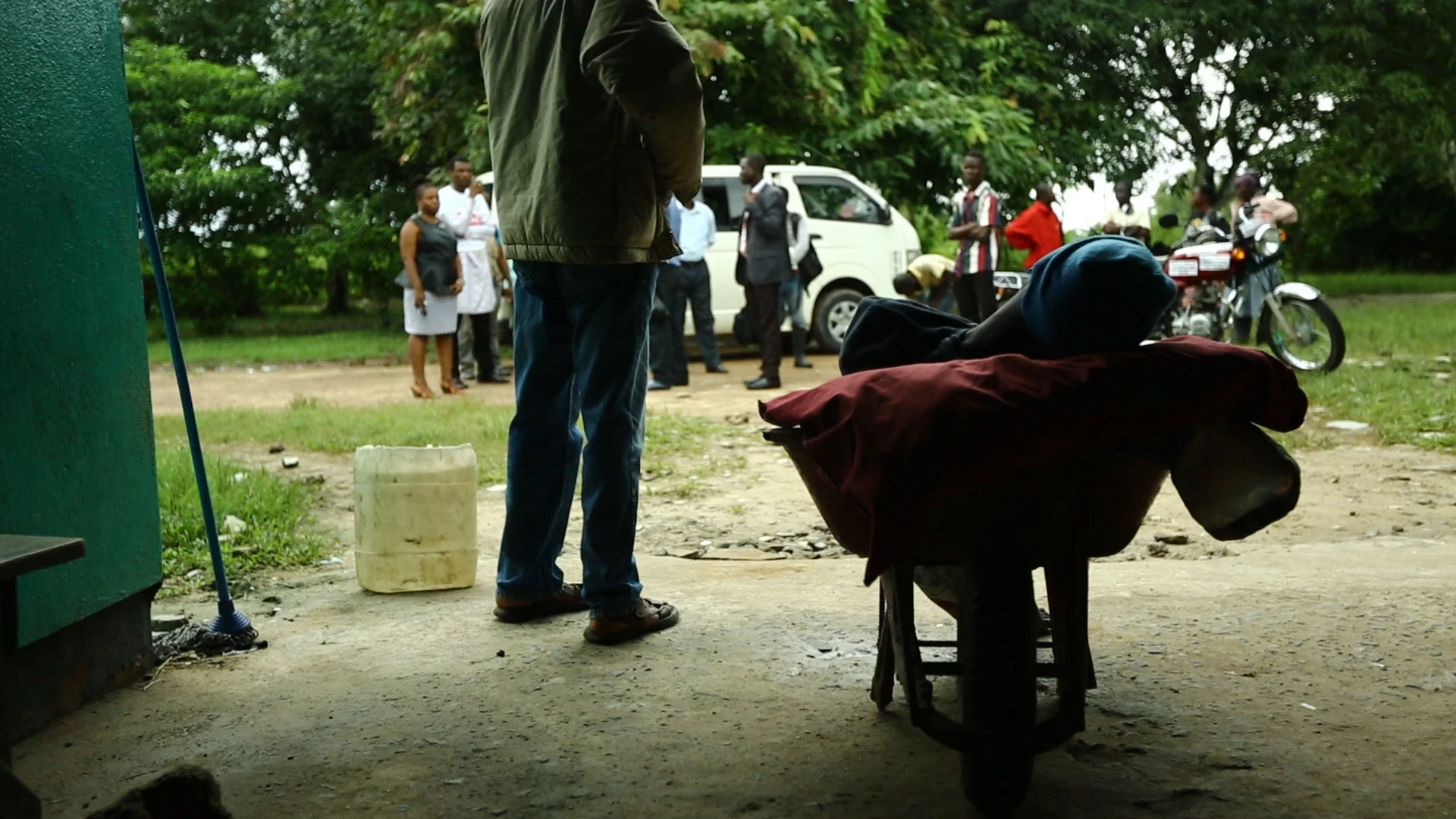
Dola Town, Liberia - Sept 1, 2014: A father brings his son to the clinic in Dola Town in a wheelbarrow because he is too weak to walk. He called the Ebola hotline and ambulances, but no one will pick him up because all the Ebola treatment centers are full and do not have room to admit new patients. Photo by Morgana Wingard
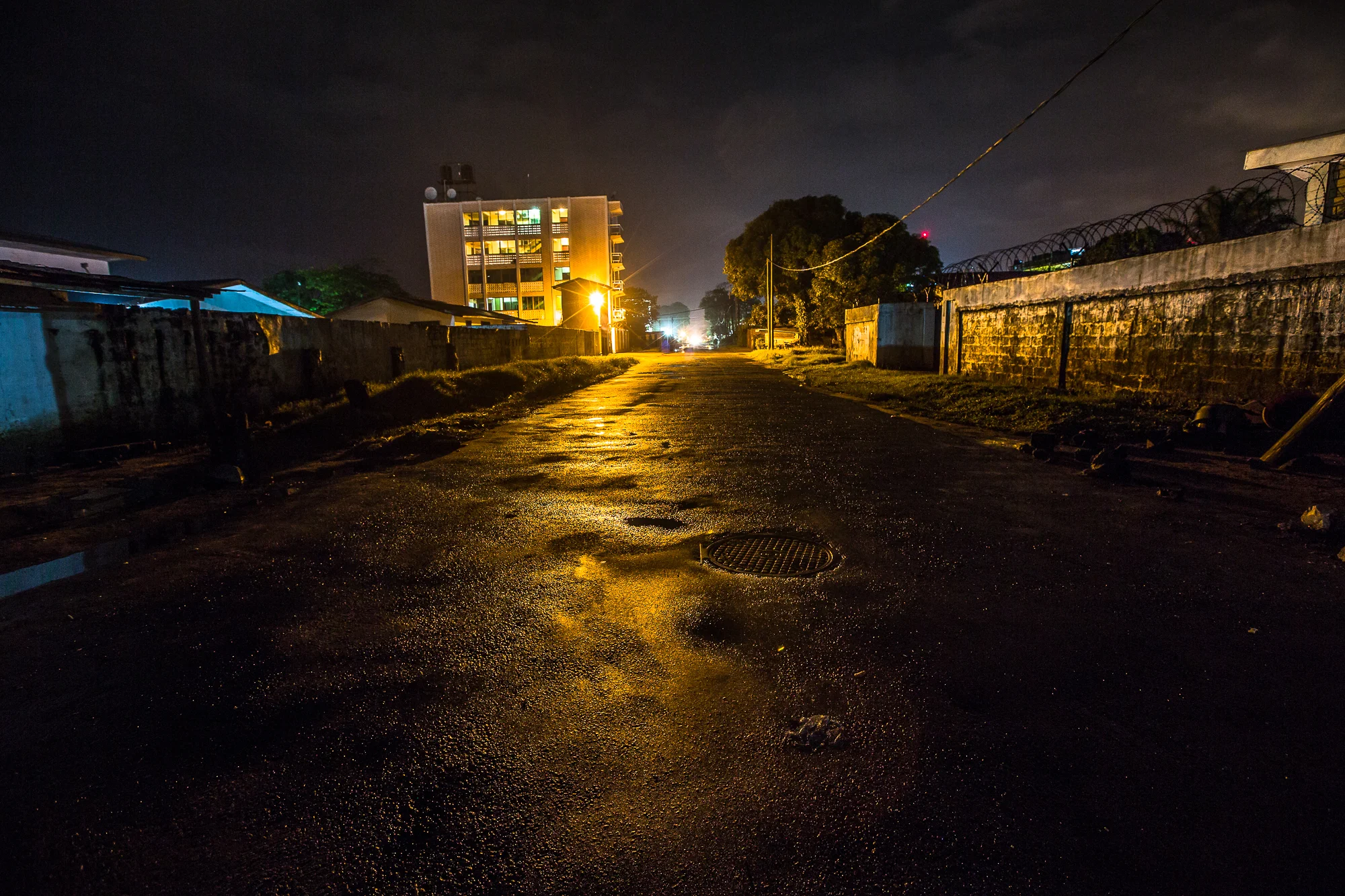
Monrovia, Liberia - Aug 24, 2014: The President of Liberia, Ellen Johnson Sirleaf, enacted a curfew starting on August 20 for all residents from 9pm to 6am every night. Streets that were normally teaming until late hours of the evening were desolate by 8:30. Night clubs and restaurants virtually shut down for months. Photo by Morgana Wingard
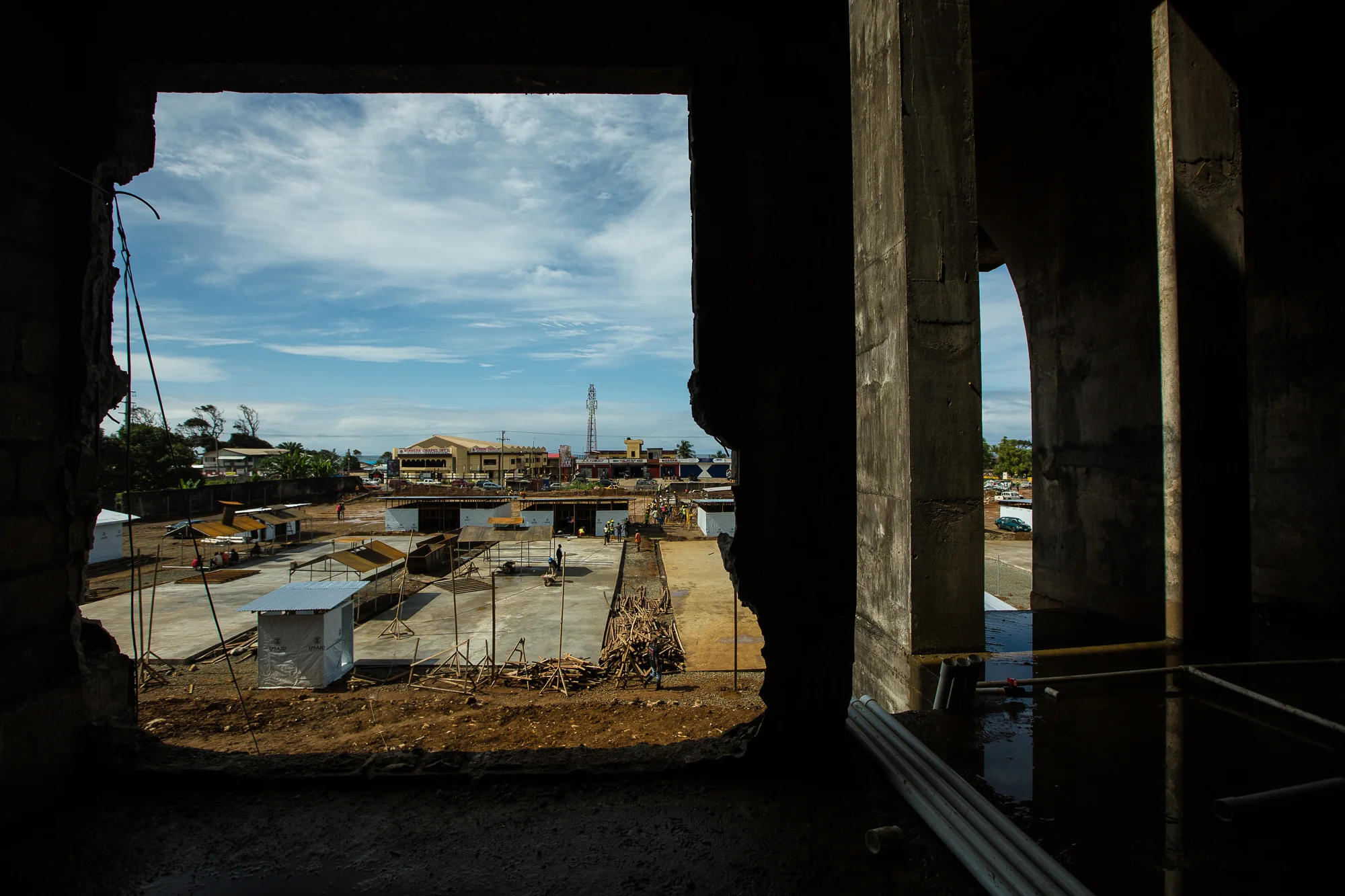
Monrovia, Liberia - October 1, 2014: With funding and support from USAID, construction crews worked quickly to build a new Ebola treatment unit on the property of the former Ministry of Defence Building to meet the demand of the increasing Ebola cases in the capitol city. Photo by Morgana Wingard
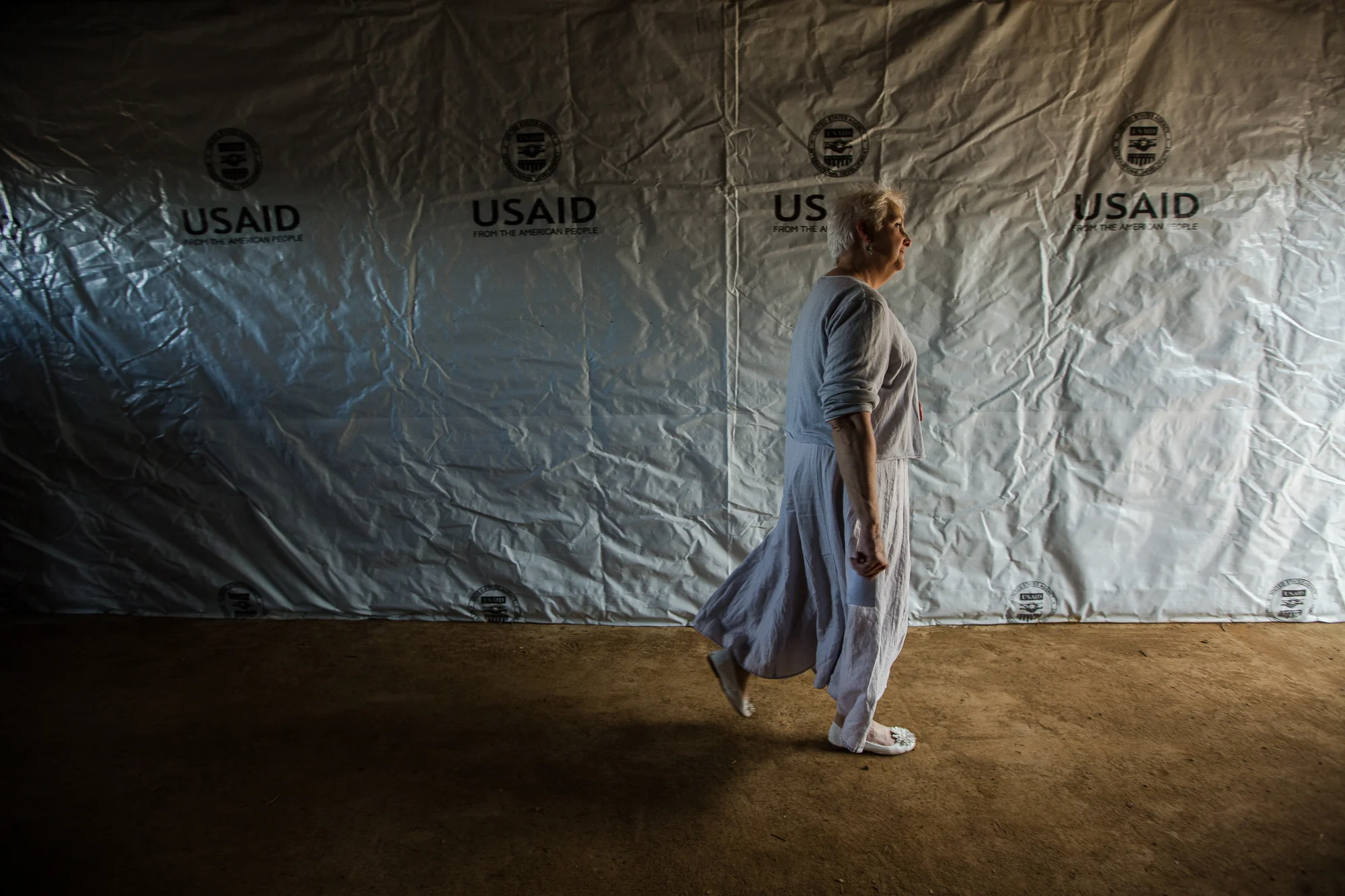
Monrovia, Liberia - October 1, 2014: U.S. Ambassador to Liberia, Deborah R. Malac, walks through what became a visiting area for families of Ebola patients inside an Ebola treatment unit build with funding from USAID on the former Ministry of Defence property. Photo by Morgana Wingard
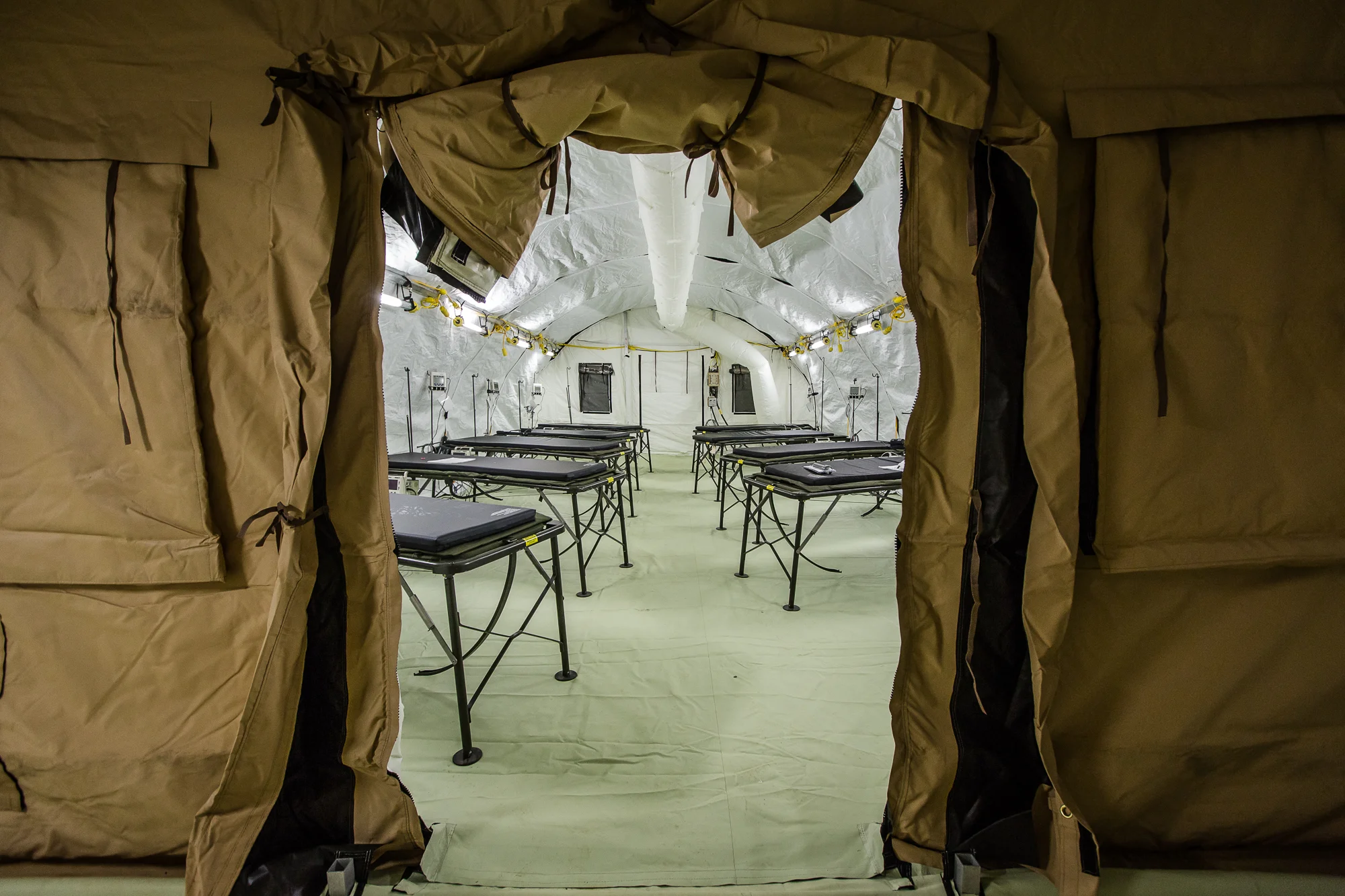
Harbel, Liberia - October 15, 2014: A first look inside 25-bed critical care hospital—staffed by U.S. medical professionals—provided by the U.S. government to treat infected Ebola healthcare workers in Liberia. Photo by Morgana Wingard
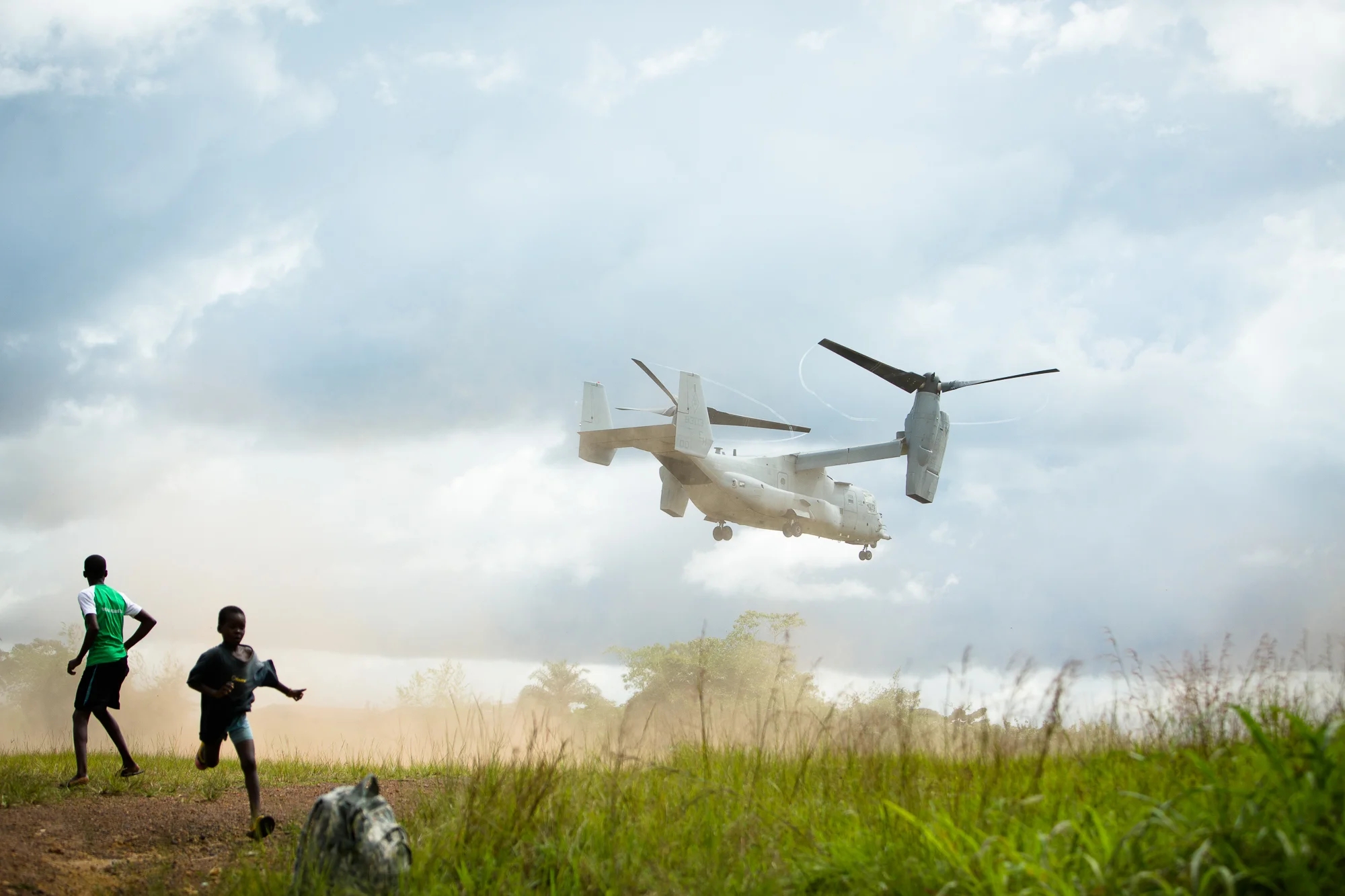
Tubmanburg, Liberia - October 15, 2014: Liberian children run as a U.S. Marine V-22 Osprey lands in Tubmanburg. Photo by Morgana Wingard

Monrovia, Liberia - October 15, 2014: Onboard a U.S. Marine V-22 Osprey landing in Monrovia. Photo by Morgana Wingard
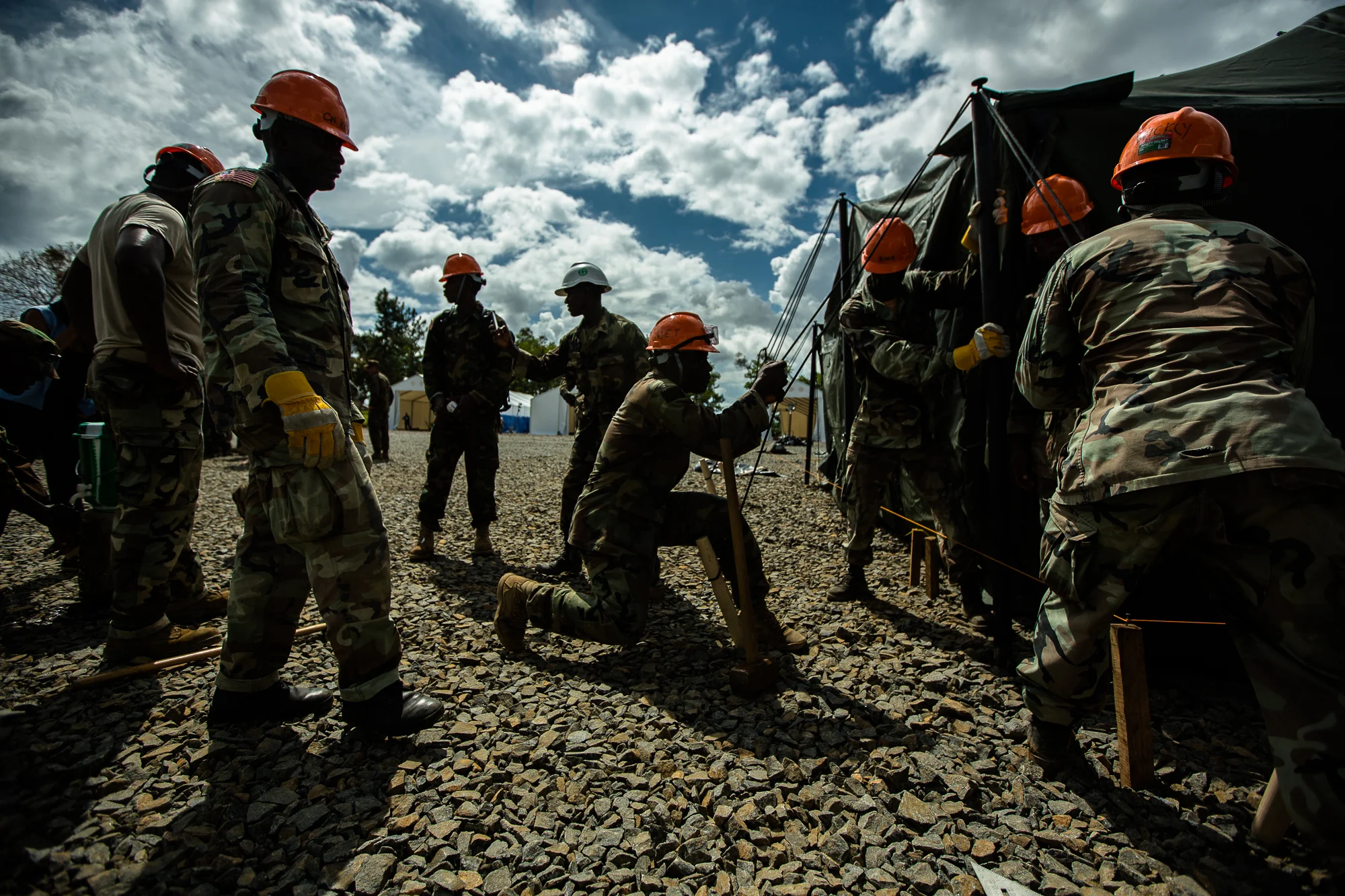
Tubmanburg, Liberia - October 15, 2014: The U.S. Department of Defense in collaboration with a team of engineers from the Armed Forces of Liberia (AFL) constructing an Ebola treatment unit in Tubmanburg, Bomi County. The team of AFL engineers were trained by U.S. Marines under Operation Onward Liberty. Operation Onward Liberty began in January 1, 2010. It is a U.S. Department of State and U.S. Department of Defense initiative designed to continue the United States' support to the government of Liberia and its ongoing efforts to transform its military. It is a five-year commitment of continued support and partnership, with mentors cycling through on six-month temporary duty assignments and some service members electing to do yearlong assignments. The construction of the Ebola treatment unit in Tubmanburg took about two to three weeks and had a capacity of up to 100 beds. Photo by Morgana Wingard
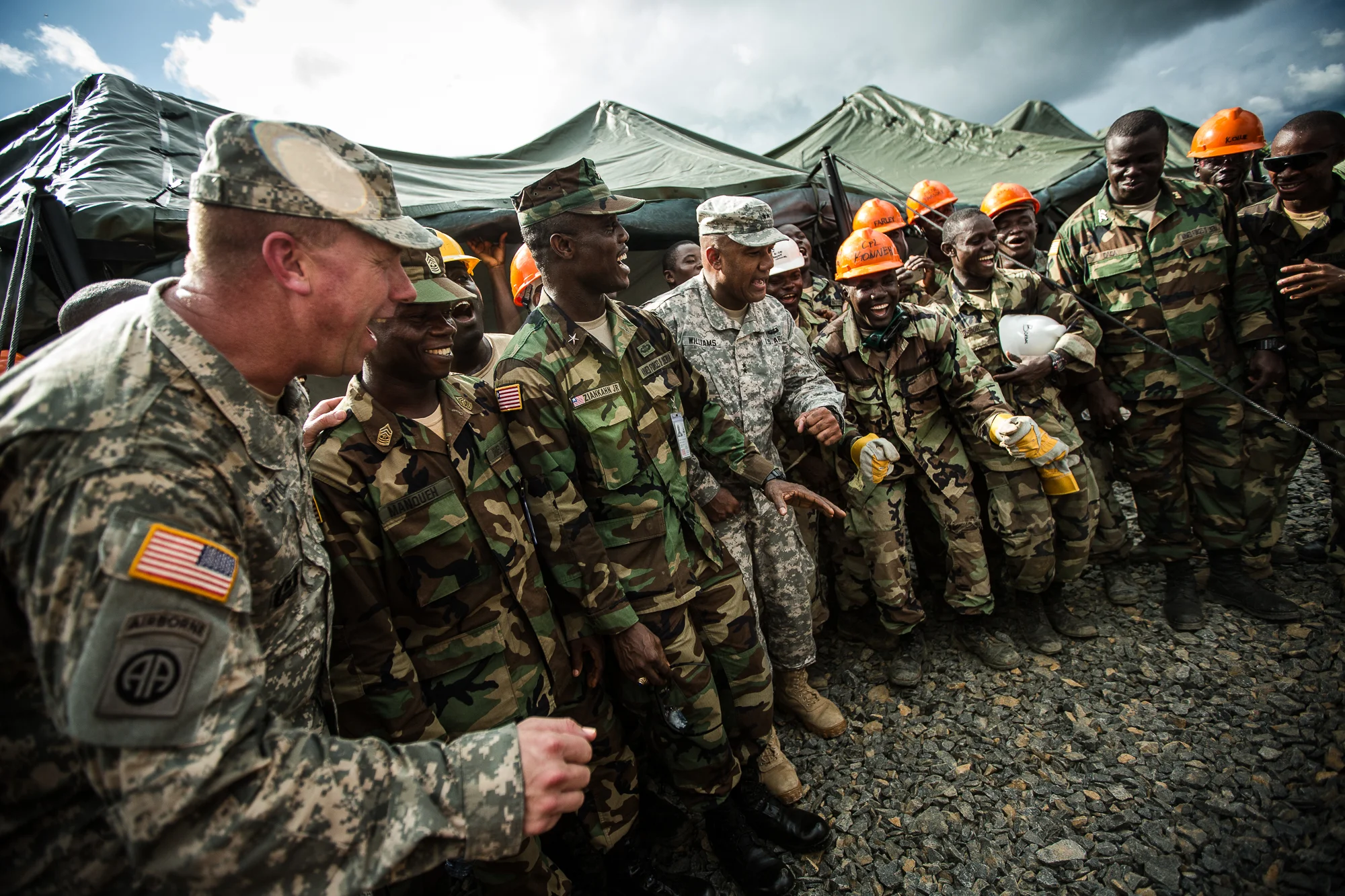
Tubmanburg, Liberia - October 15, 2014: Army Major General, Darryl Williams, (commanding general of U.S. Army Africa) chants with Armed Forces of Liberia (AFL) engineers constructing a new Ebola treatment unit. Photo by Morgana Wingard
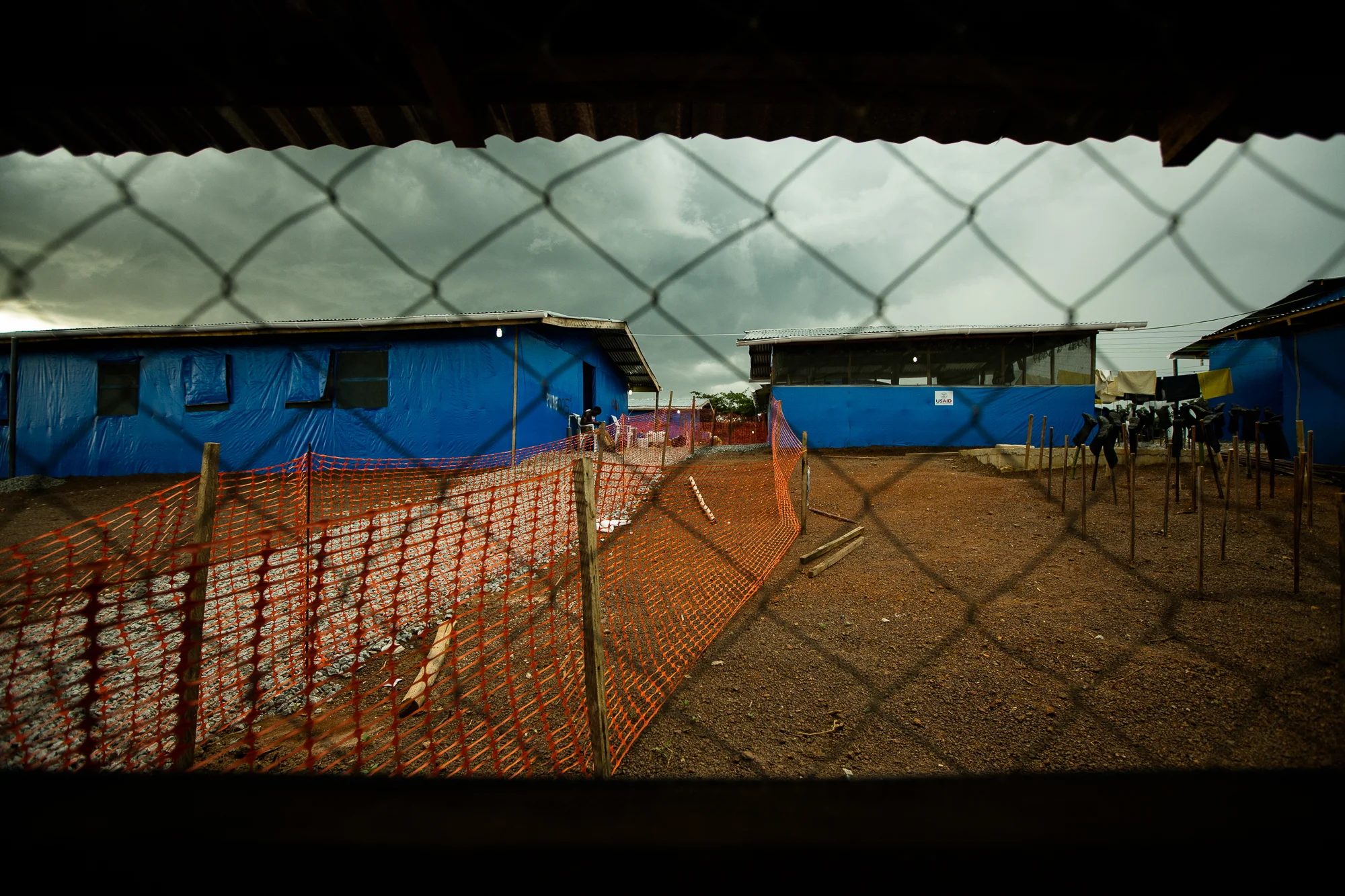
Suakoko, Bong County, Liberia - October 9, 2014: The Bong County Ebola treatment unit run by International Medical Corps with support and funding from USAID. Photo by Morgana Wingard
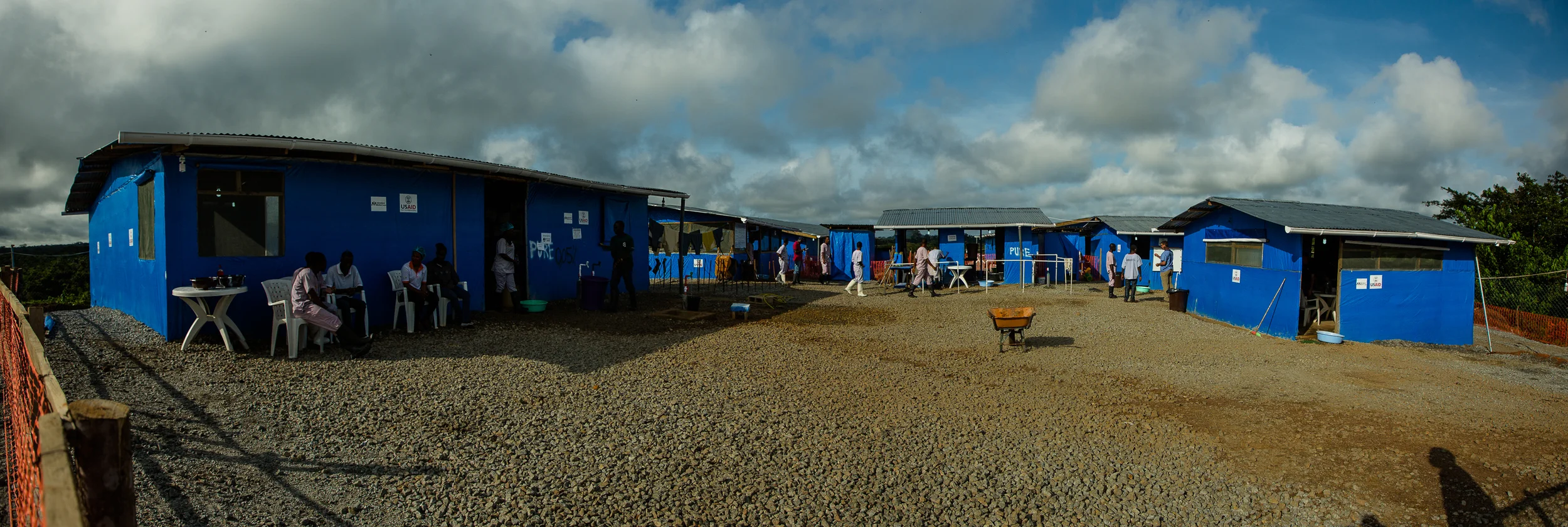
Suakoko, Bong County, Liberia - October 9, 2014: The Bong County Ebola treatment unit run by International Medical Corps with support and funding from USAID. Photo by Morgana Wingard
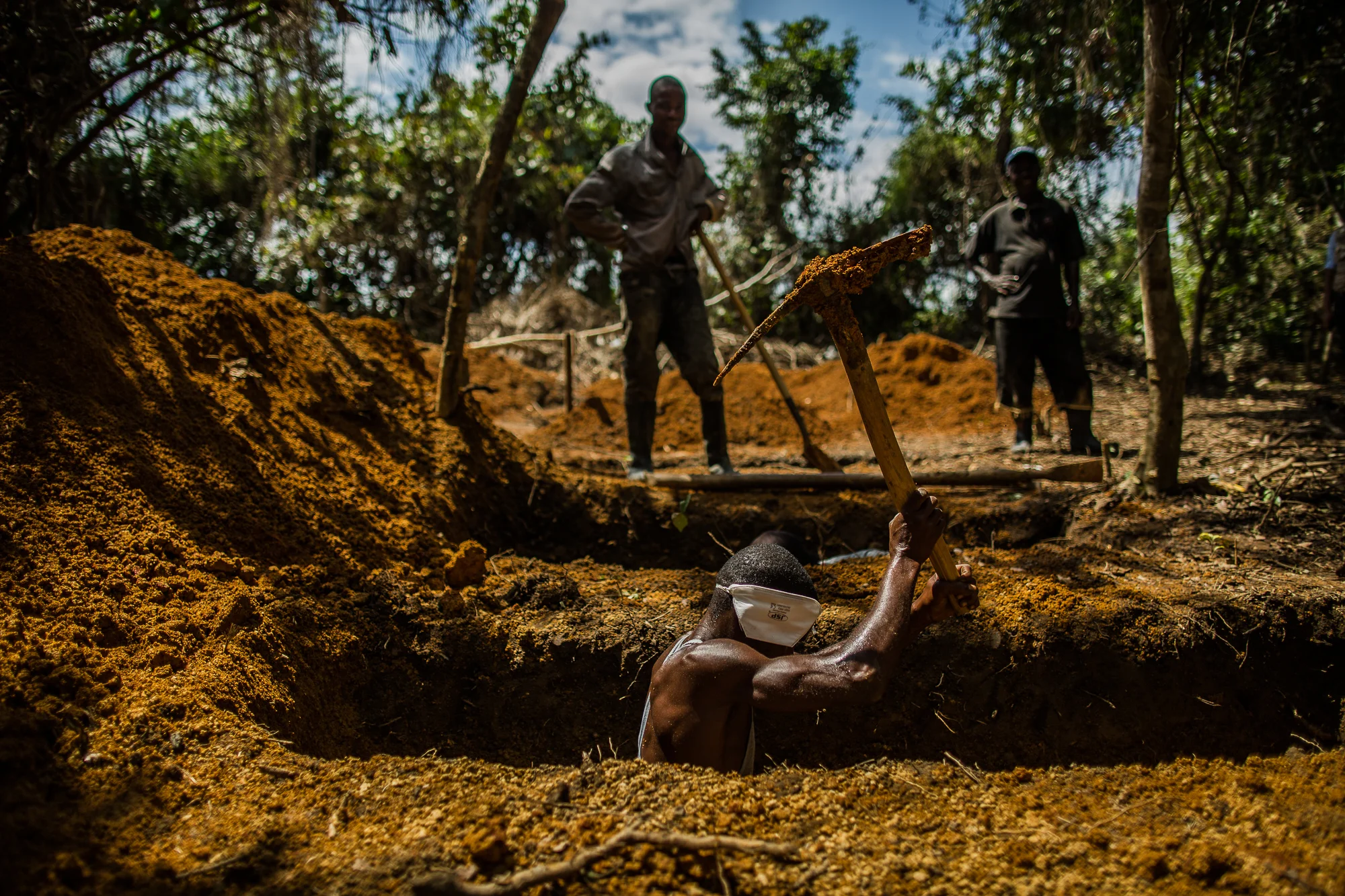
Suakoko, Bong County, Liberia - October 7, 2014: Grave diggers at the International Medical Corps Ebola treatment dig graves for patients who die of Ebola. Every body is buried in a sealed bag and the area is sprayed with chlorine. The graveyard was built to accommodate cultural practices and provide a place where relatives can visit family members—an important Liberian custom. Photo by Morgana Wingard
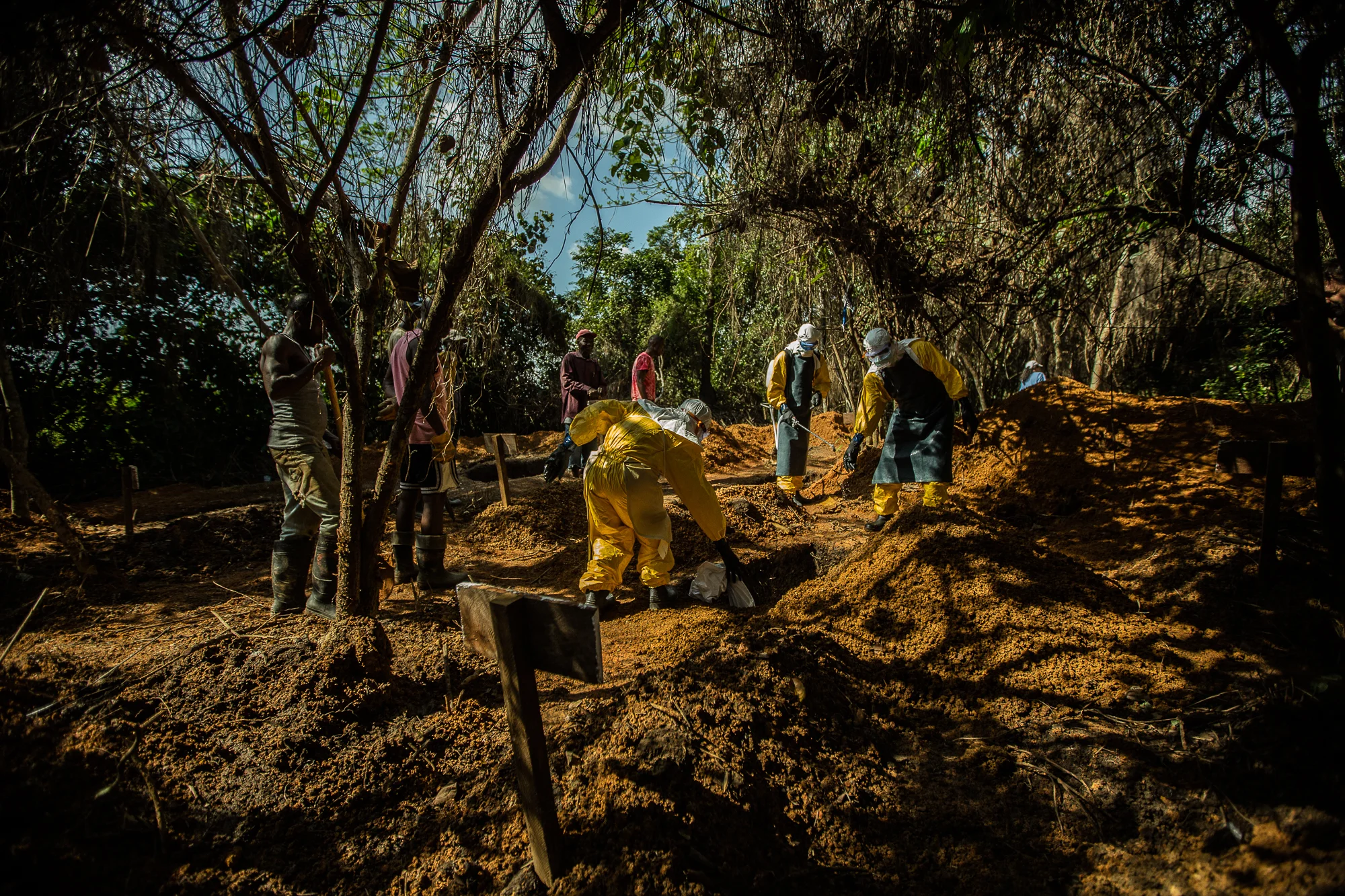
Bong County, Liberia - October 8, 2014: A burial team at the International Medical Corps Ebola treatment unit lower a body from an Ebola patient into a grave in their graveyard built behind the clinic. Photo by Morgana Wingard
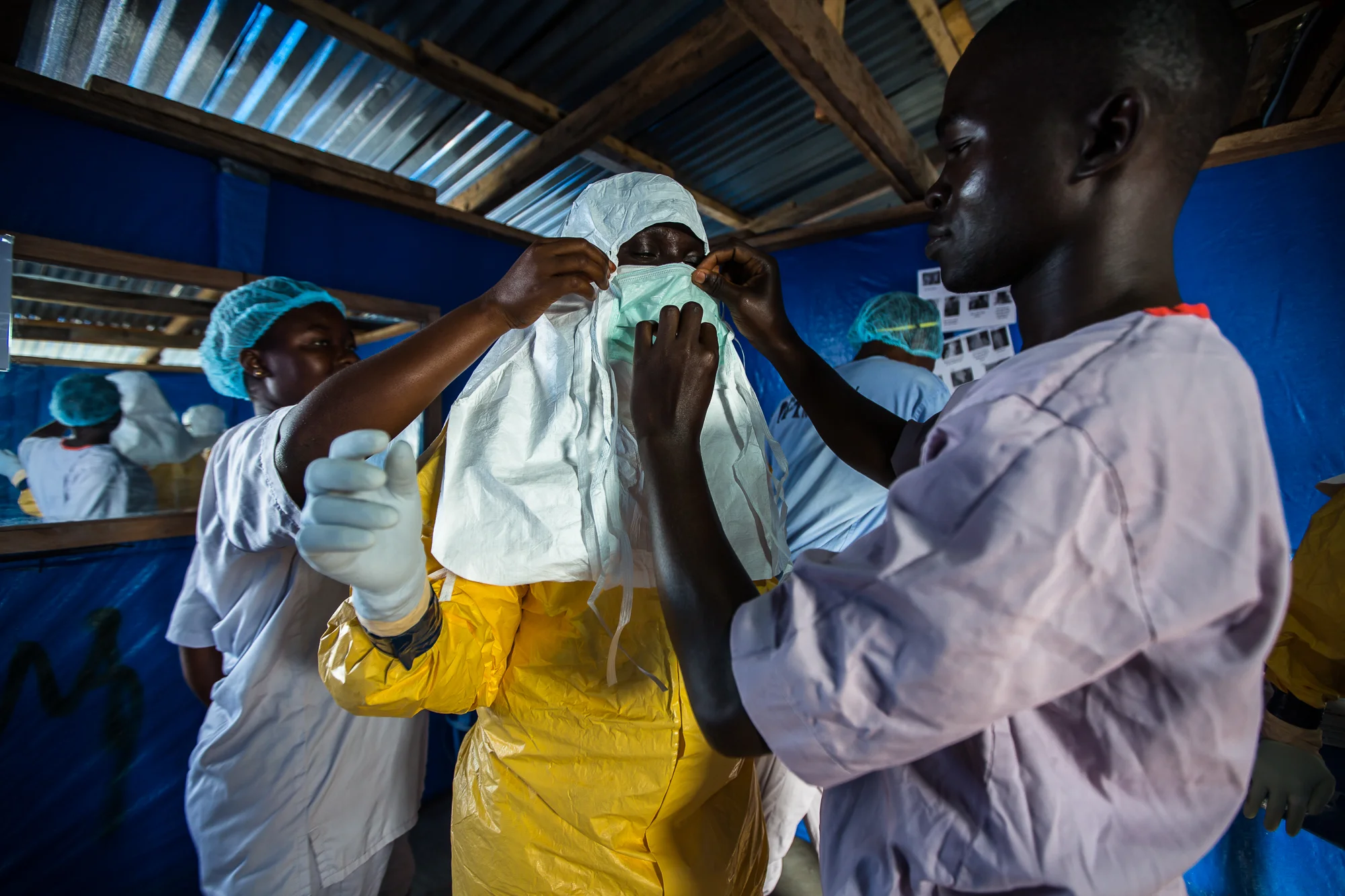
Suakoko, Bong County, Liberia - October 9, 2014: Felicia, a 29 year old Liberian nurse, prepares to go inside the Ebola patient ward to draw blood from confirmed patients. The samples are sent to the U.S. Navy Mobile lab for testing. If a patient receives 2 consecutive negative results they are delcared free of Ebola and released. Photo by Morgana Wingard
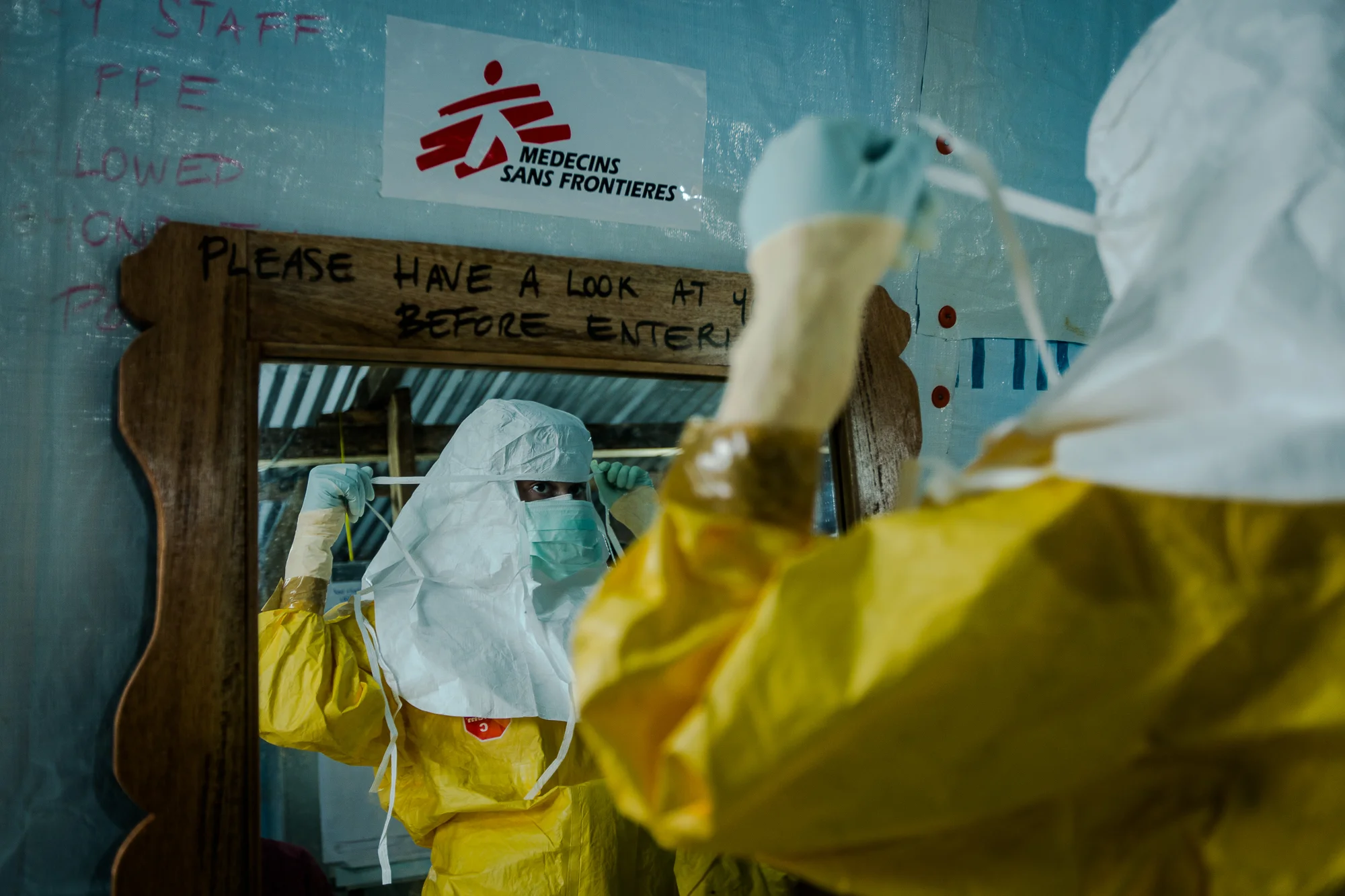
Monrovia, Liberia - Aug 30, 2014: All healthcare workers must wear full Personal Protective Equipment (PPE) before they cross over into the hot zone or patient area at ELWA 3—the main Ebola treatment unit run by Doctors Without Borders (MSF) in Monrovia. A mirror next to the entrance reminds them to check their PPE for any holes or openings. This could mean the difference between life and death. Photo by Morgana Wingard
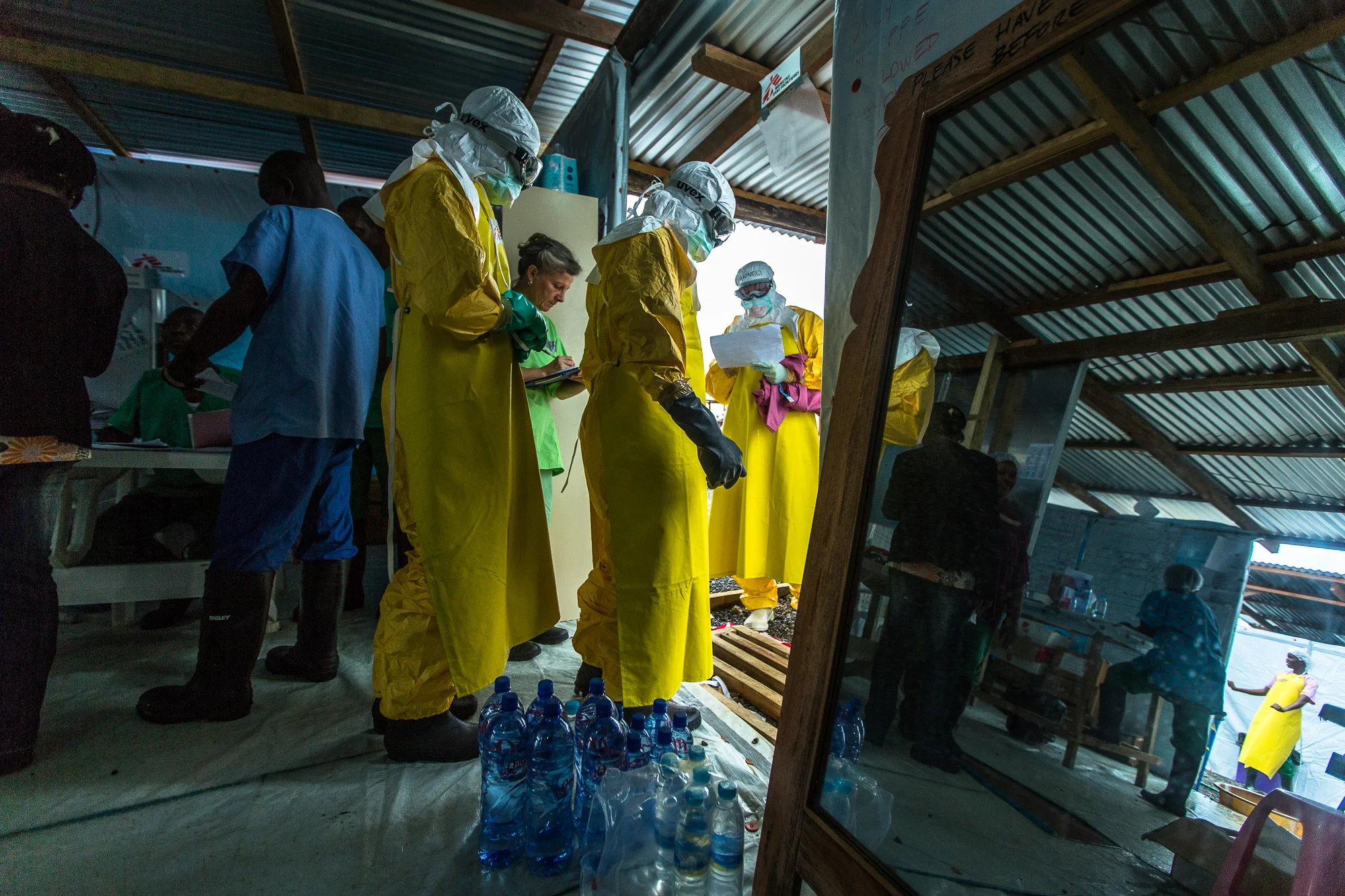
Monrovia, Liberia - Aug 30, 2014: Noah, a hygenist, suited up in his Personal Protective Equipment (PPE) enters the hot zone for the first time at ELWA 3. Only staff dressed in PPE are allowed past this point and nothing that goes in can come out. Already inside, Anneli Erickson, a nurse from Sweden, explains the patient obervations on a sheet from her round to Vernique, a nurse from Canada on the outside, to rewrite the information on a new sheet of paper because the orginal sheet must be destoryed. ELWA 3 was the Ebola treatment unit run by Doctors Without Borders (MSF) in Monrovia. Photo by Morgana Wingard
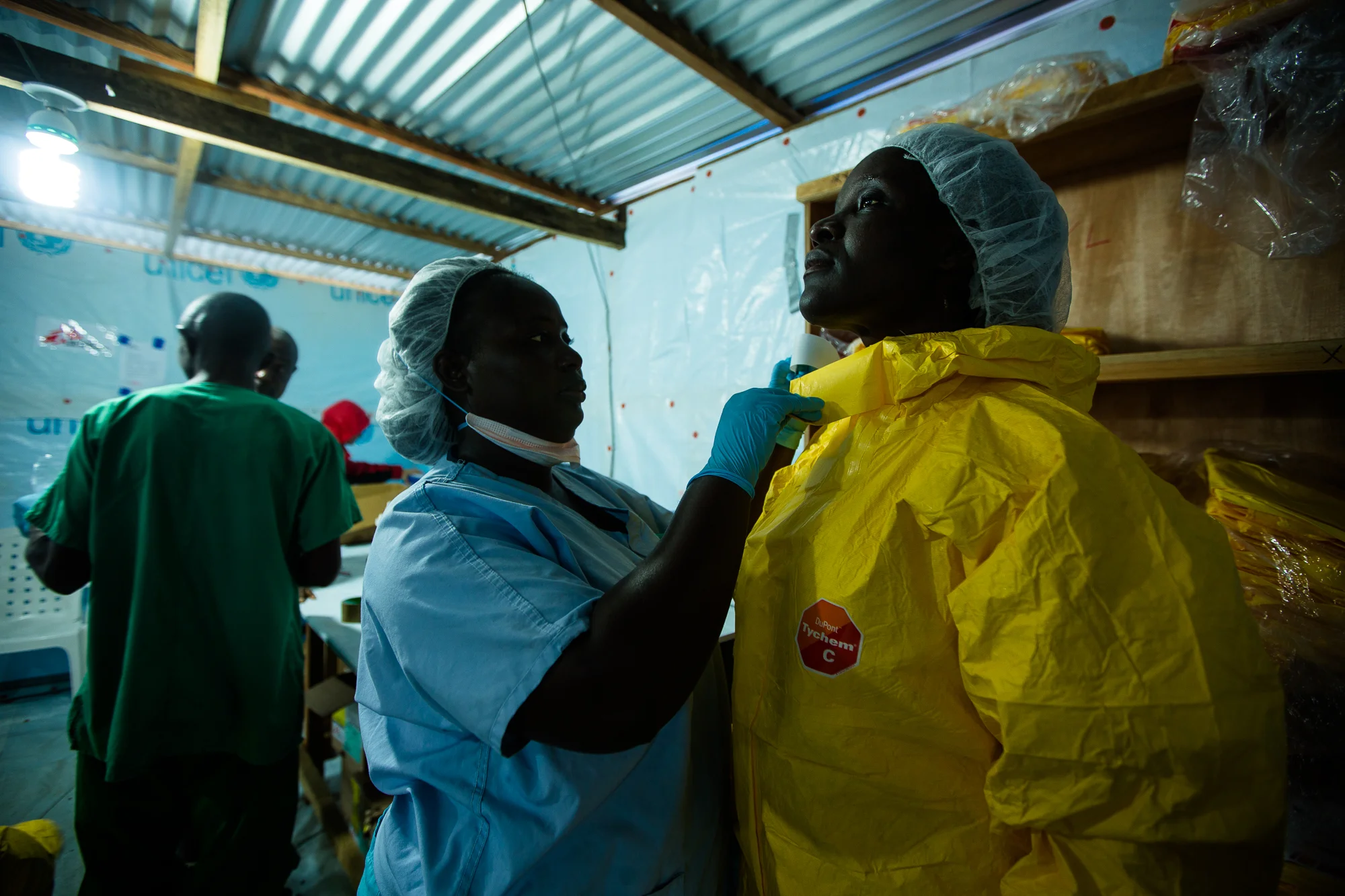
Monrovia, Liberia - Aug 30, 2014: Agnes, a member of the Psychosocial Team dresses in her Personal Protective Equipment (PPE) to prepare to enter the hot zone at ELWA 3—the Ebola treatment unit (ETU) run by Doctors Without Borders (MSF). Agnes brings gifts of biscuits, juice, and clothes from family members and friends to patients inside the facility. In addition to delivering packages her role is to counsel them and encourage them. She says this is her passion and she has interest in working with her brothers and sister of Liberia. She started at the ETU one week before. Photo by Morgana Wingard
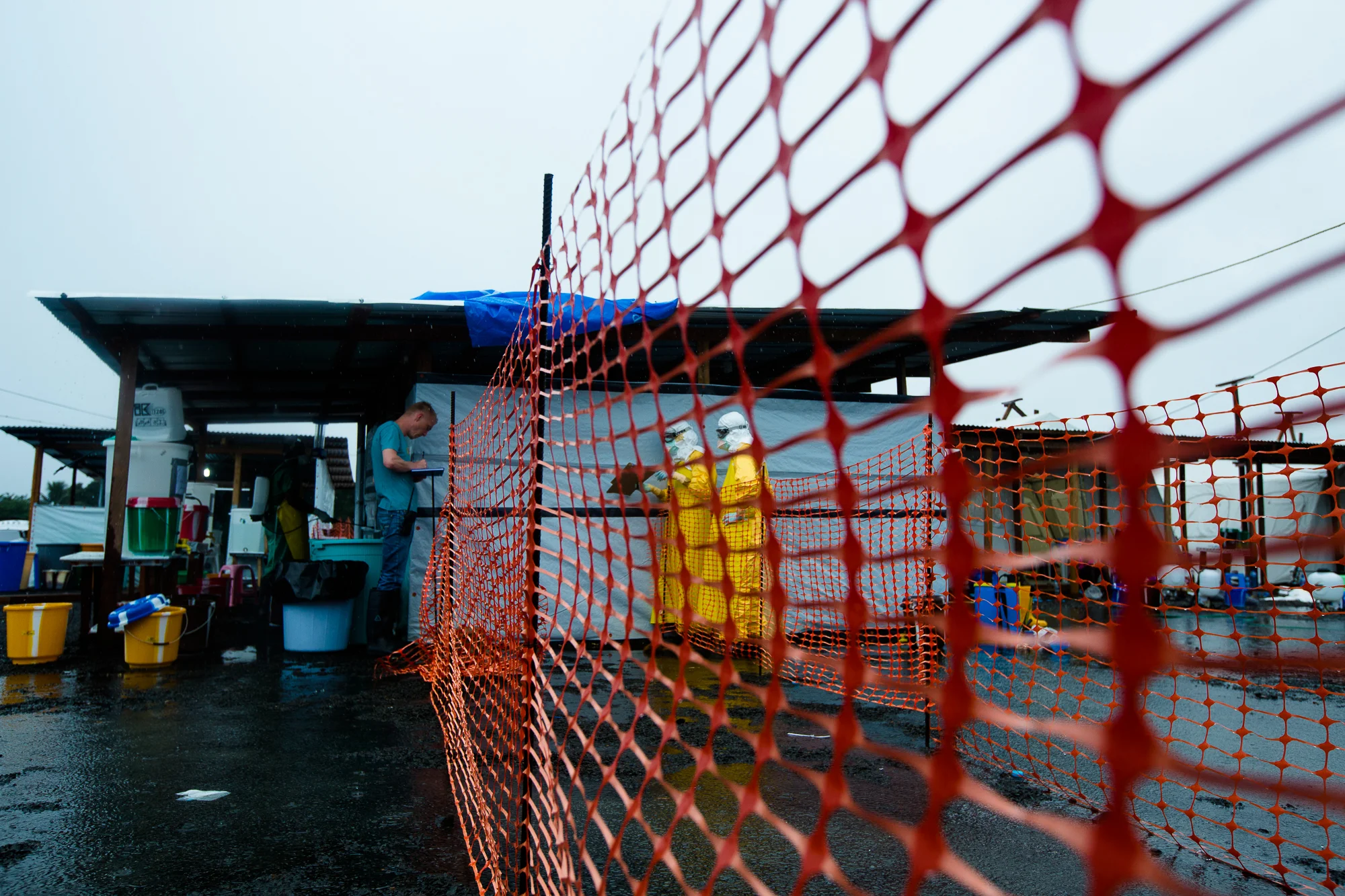
Monrovia, Liberia - Aug 30, 2014: Health workers in Personal Protective Equipment inside the Ebola hot zone yell observations from patient rounds across the fence to Jens Pederson, a nurse with Doctors Without Borders (MSF), because papers cannot cross the fence back to the outside world at ELWA—the Ebola treatment unit run by MSF in Monrovia. Photo by Morgana Wingard
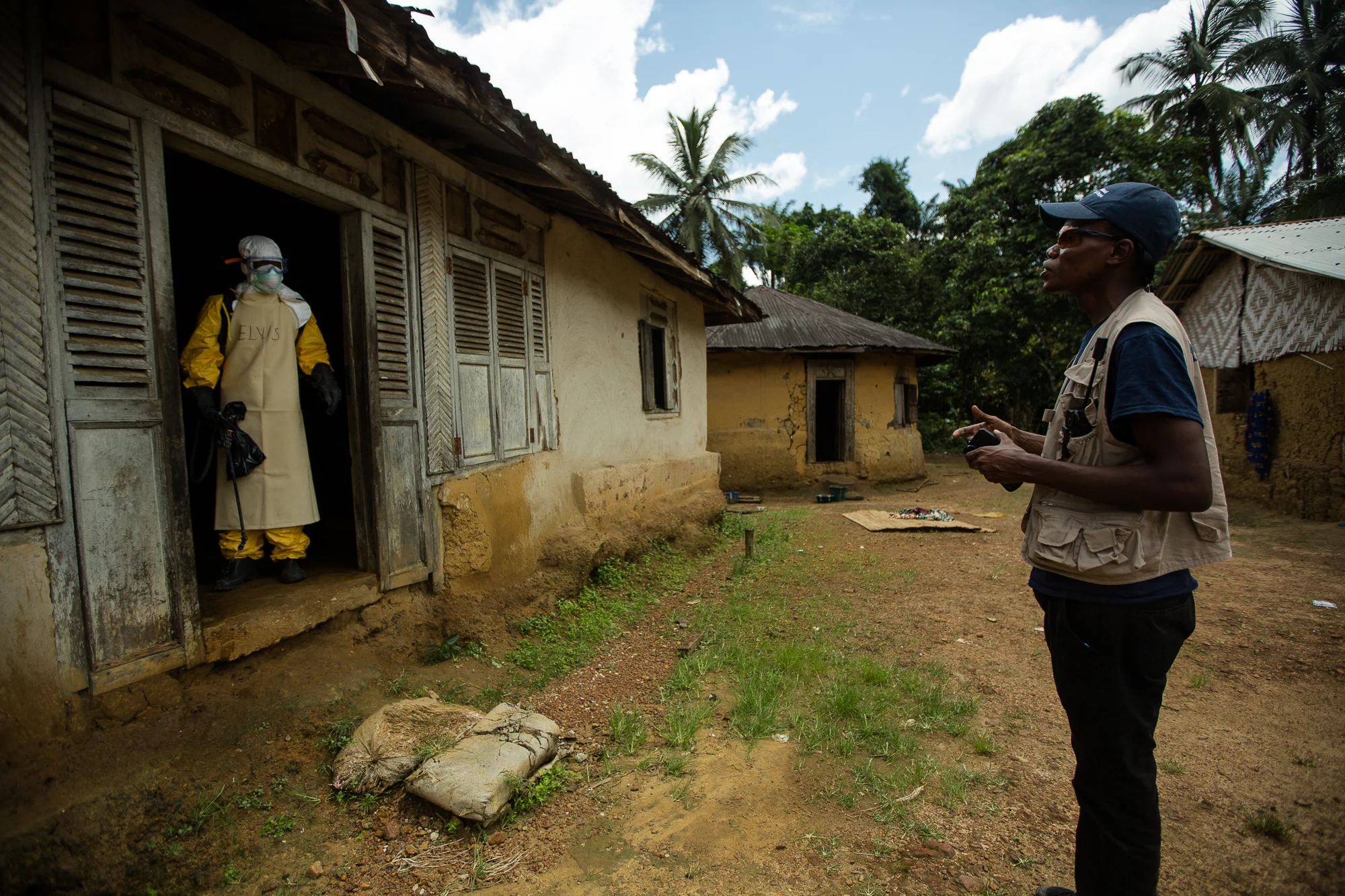
Bong County, Liberia - October 9, 2014: Team leader, Elvis, speaks with a member of the International Medical Corps (IMC) Ebola response team who entered a family home in Mawa Town to check on an elderly woman who became sick after several members of her family have died of Ebola. Several members of the community have already died of Ebola so the response team used the opportunity to educate the town. Photo by Morgana Wingard
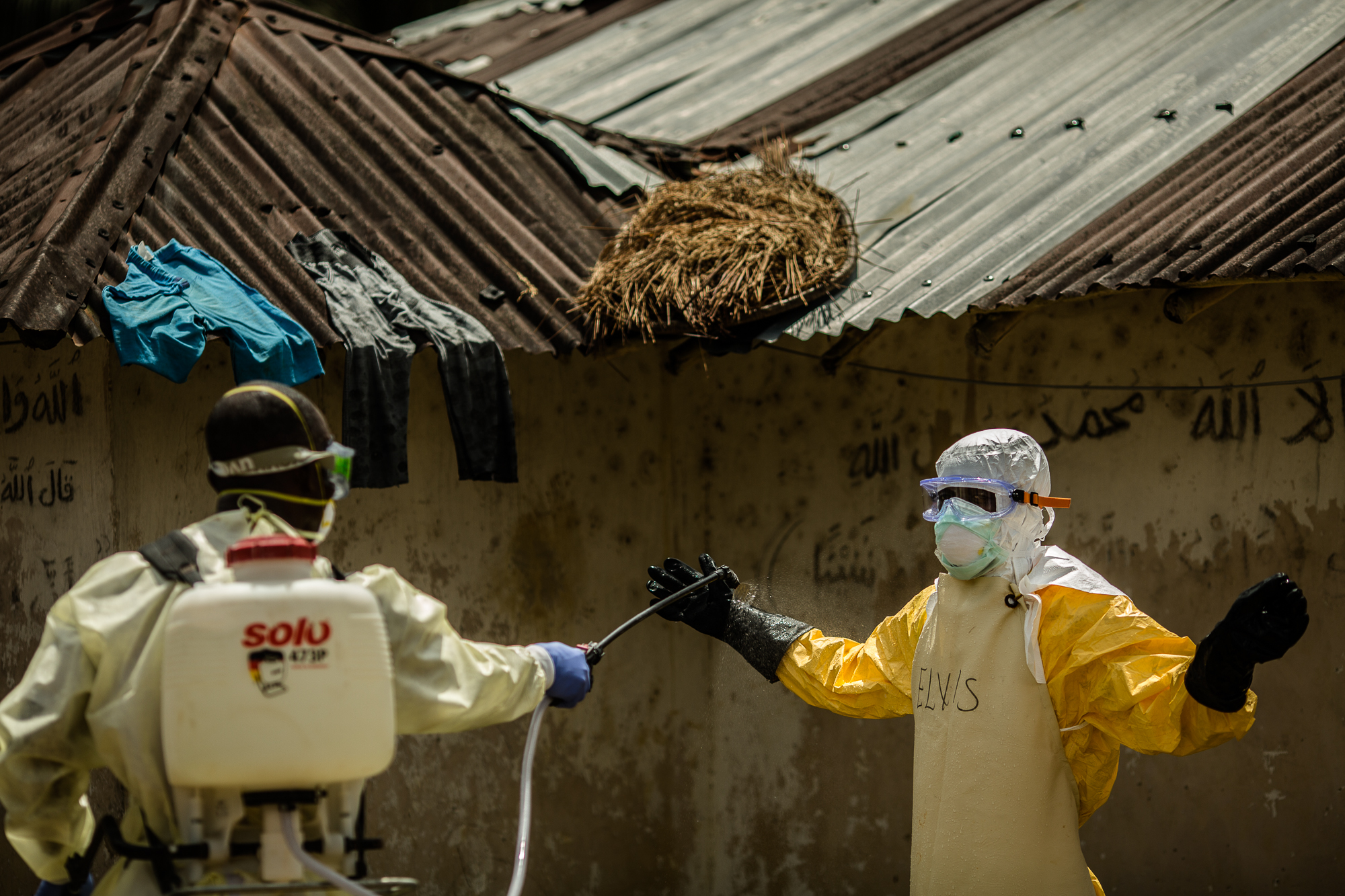
Bong County, Liberia - October 9, 2014: A member of the International Medical Corps (IMC) Ebola response team gets sprayed with chlorine after going into a family home in Mawa Town to check on an elderly woman who is sick after several members of her family have died of Ebola. Photo by Morgana Wingard
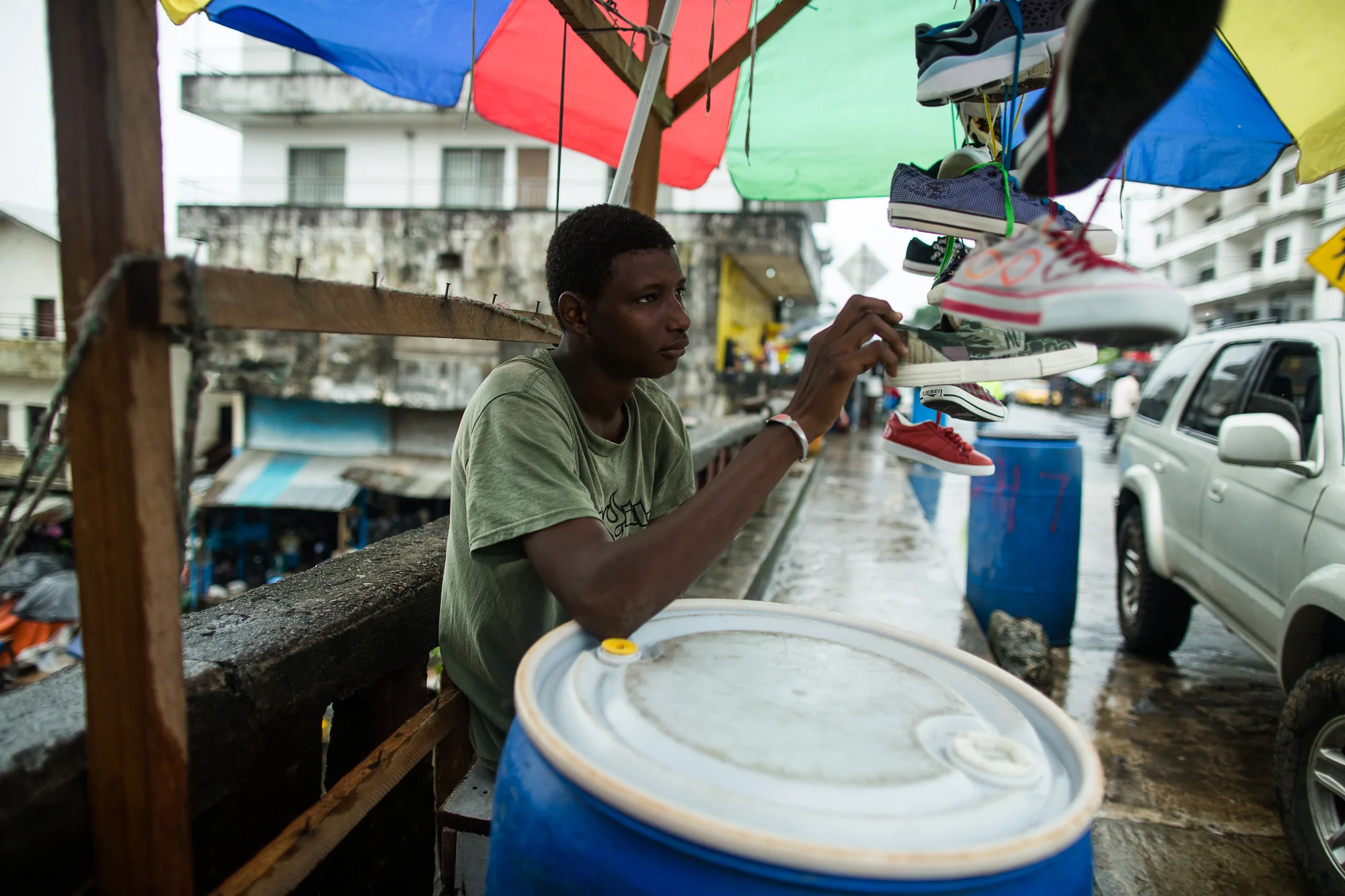
Monrovia, Liberia - September 18, 2014: Ibrahim (20) and Edmond (30) sell shoes in Waterside Market in downtown Monrovia. Normally at this time of year they are selling shoes for students going back to school. On a typical day they would sell 2-5 pairs. Since the Ebola virus outbreak, sales have plummeted. Schools are closed and Liberians are staying at home as much as possible to avoid exposure. Many people have lost their jobs and are living on their savings to survive. Photo by Morgana Wingard
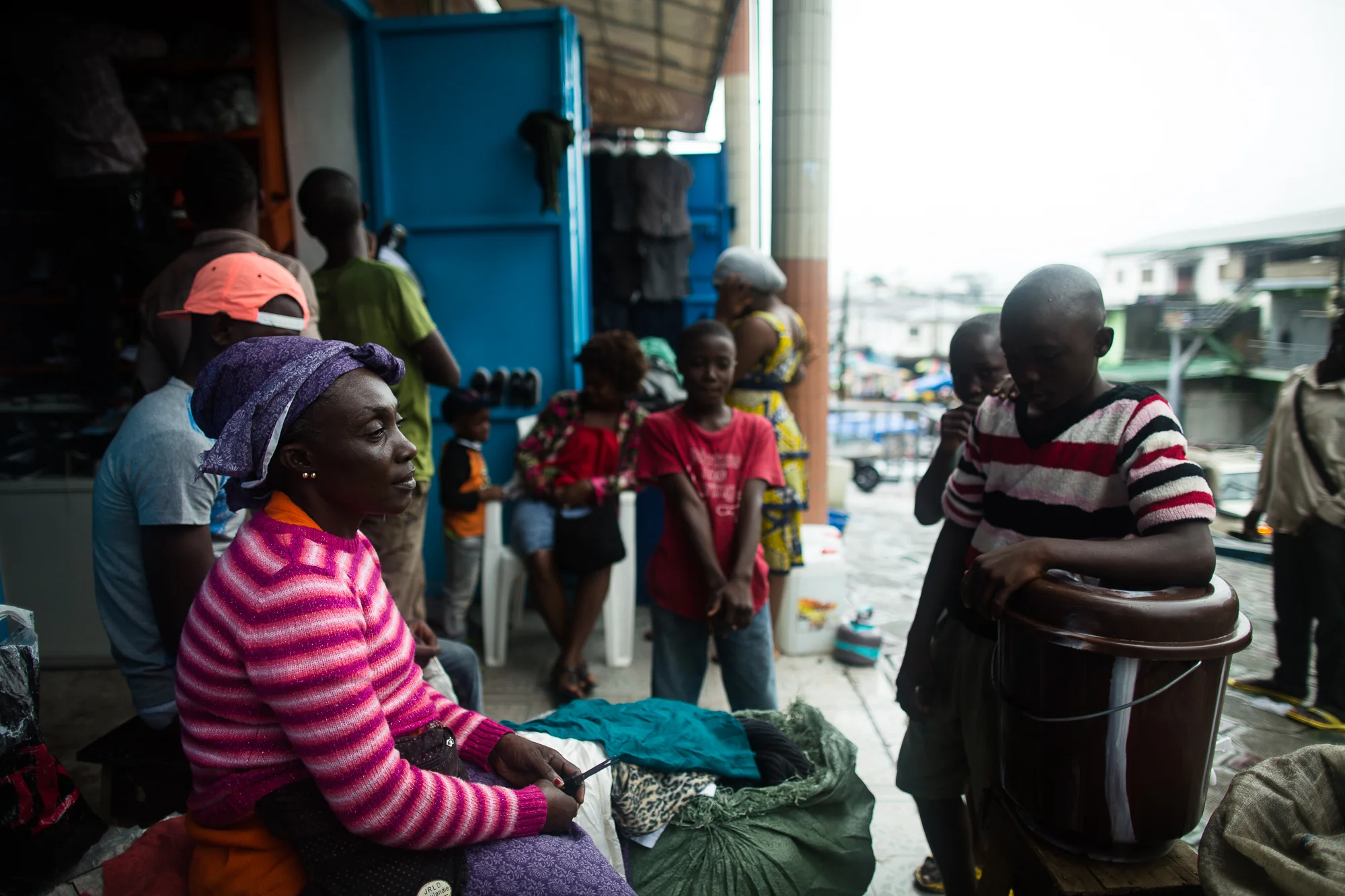
Monrovia, Liberia - September 18, 2014: Anne Benson (49) sells used clothes in Waterside Market to support her 9 children and 5 grandchildren. She lives with her husband and children in Sinkor. Since the Ebola outbreak her sales have plummeted. She used to sell 2,000-3,000LD ($23-$35USD) per day. Now she's lucky if she sells 500 LD ($6 USD) worth of clothes per day. She says only people in town are buying. People are not traveling to the market anymore because of the costs of transportation and the fear of taxis which are often carrying Ebola patients to Ebola treatment units. When she travels to work in a taxi she protects herself from the other passengers in the car with a long sweater. She makes all of her children, except two, stay at home all day to protect them from the Ebola virus and regularly uses hand sanitizer and their bucket of chlorine water at home. Photo by Morgana Wingard
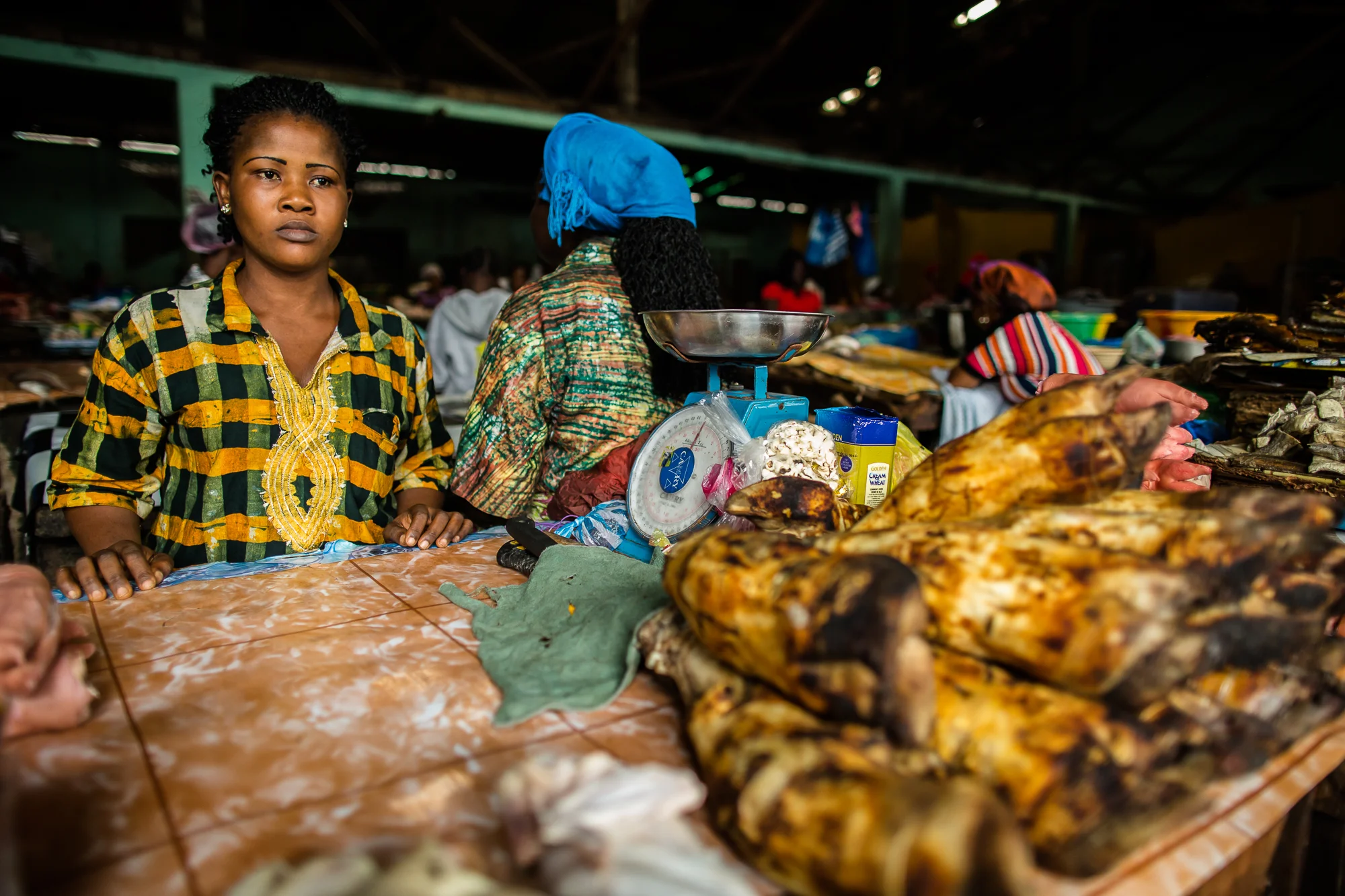
Monrovia, Liberia - September 18, 2014: Ama and Oretha sell meat in Waterside Market. Since the Ebola outbreak and the quarantine of West Point their sales have plummeted. With the cost of transport and goods going up and sales going down they are making no profit to support their families. Photo by Morgana Wingard
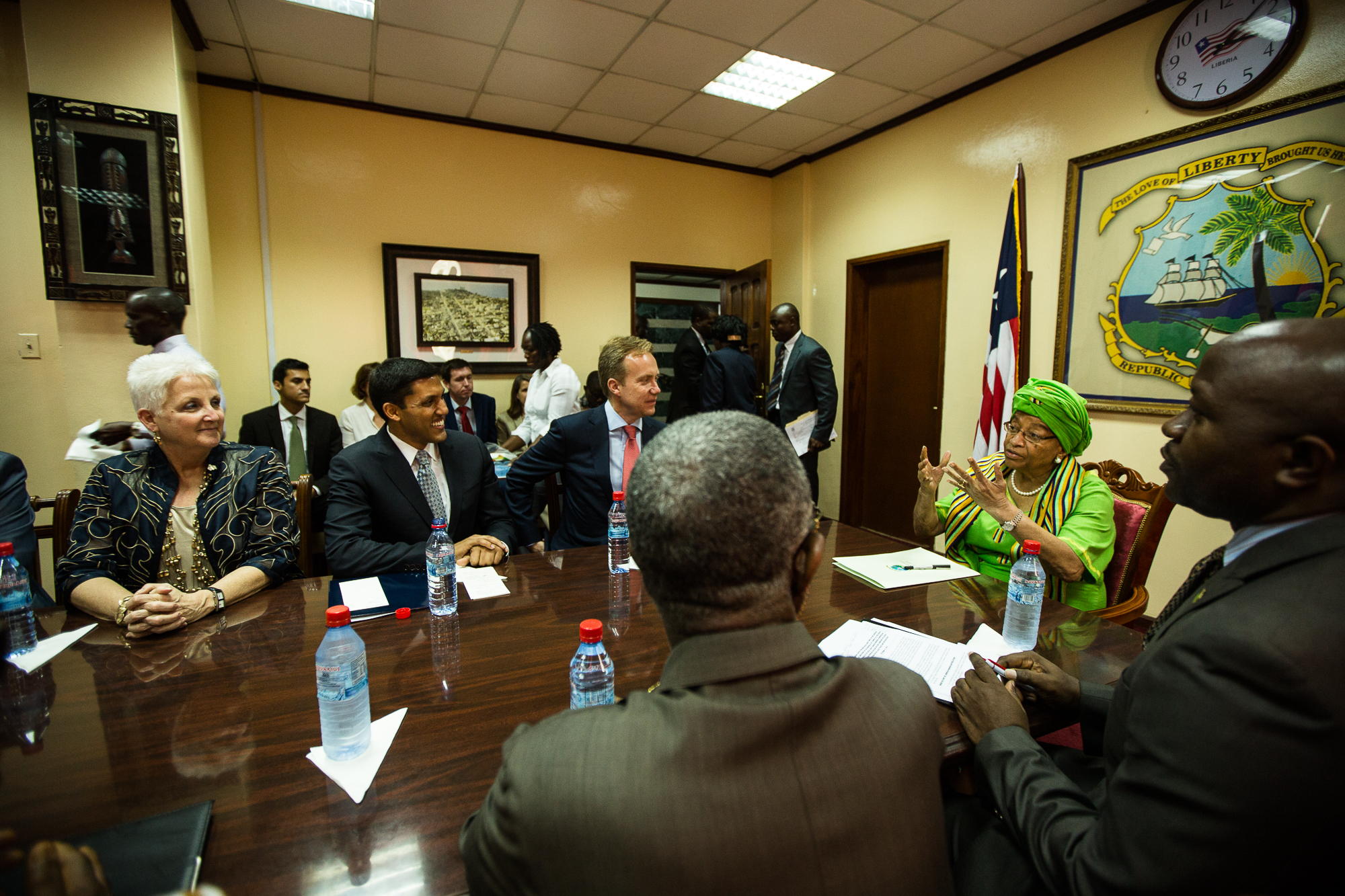
Monrovia, Liberia - October 14, 2014: USAID Administrator, Raj Shah, Norwegian Minister of Foreign Affairs, Børge Brende, and U.S. Ambassador, Deborah Malac, meet with President Ellen Johnson Sirleaf and her ministers about the Ebola outbreak in Liberia. Photo by Morgana Wingard
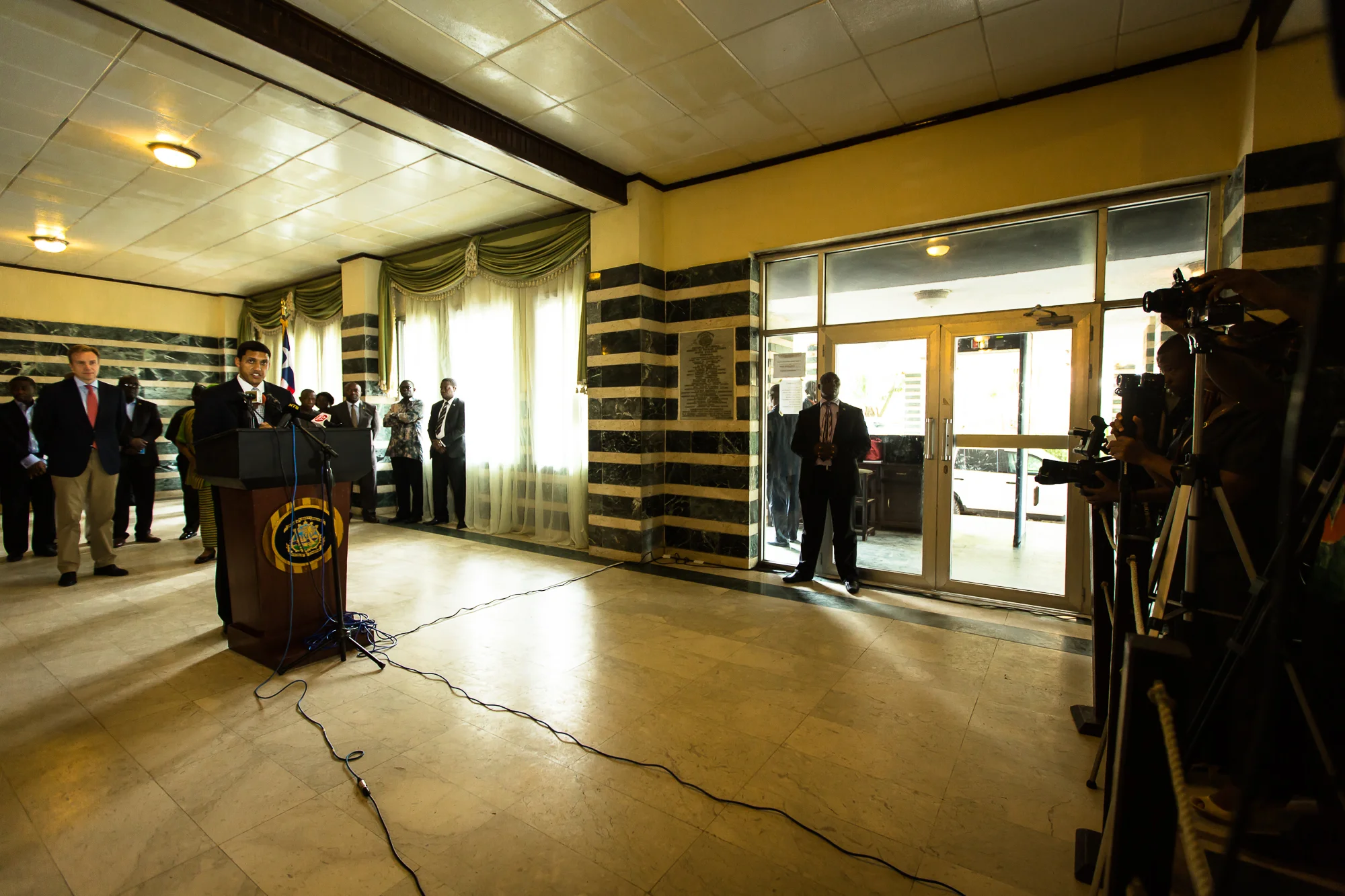
Monrovia, Liberia - October 14, 2014: USAID Administrator, Raj Shah, and President Ellen Johnson Sirleaf hold a press conference at the Ministry of Foreign Affairs to talk about their coordinated efforts to stop the spread of the Ebola virus. Administrator Shah announced an additional $142 million in USAID humanitarian activities to support the Ebola outbreak response. Photo by Morgana Wingard
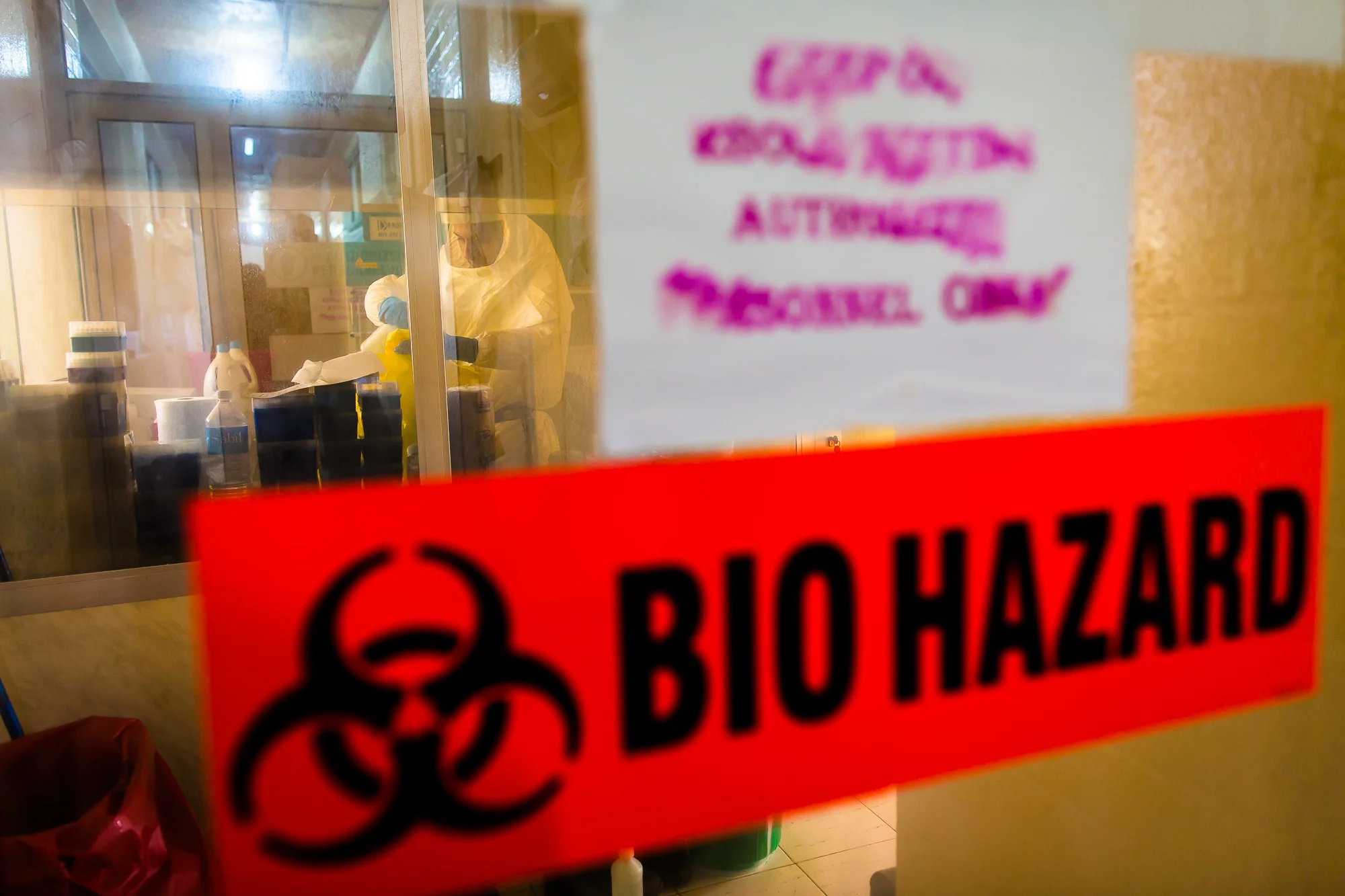
Harbel, Liberia - September 26, 2014: Dr. Anthony Jones works inside an Ebola testing lab at the Liberian Institute for Biomedical Research (LIBR). “This is one of the best labs Africa has ever seen,” says Alec Hail, Senior Clinical Veterinarian at the U.S. Army Medical Research Institute of Infectious Diseases (USAMRIID). The lab started off by testing 20 to 30 specimens per day. Just a few weeks later, they were testing up to 80 specimens from across the country per day. Photo by Morgana Wingard
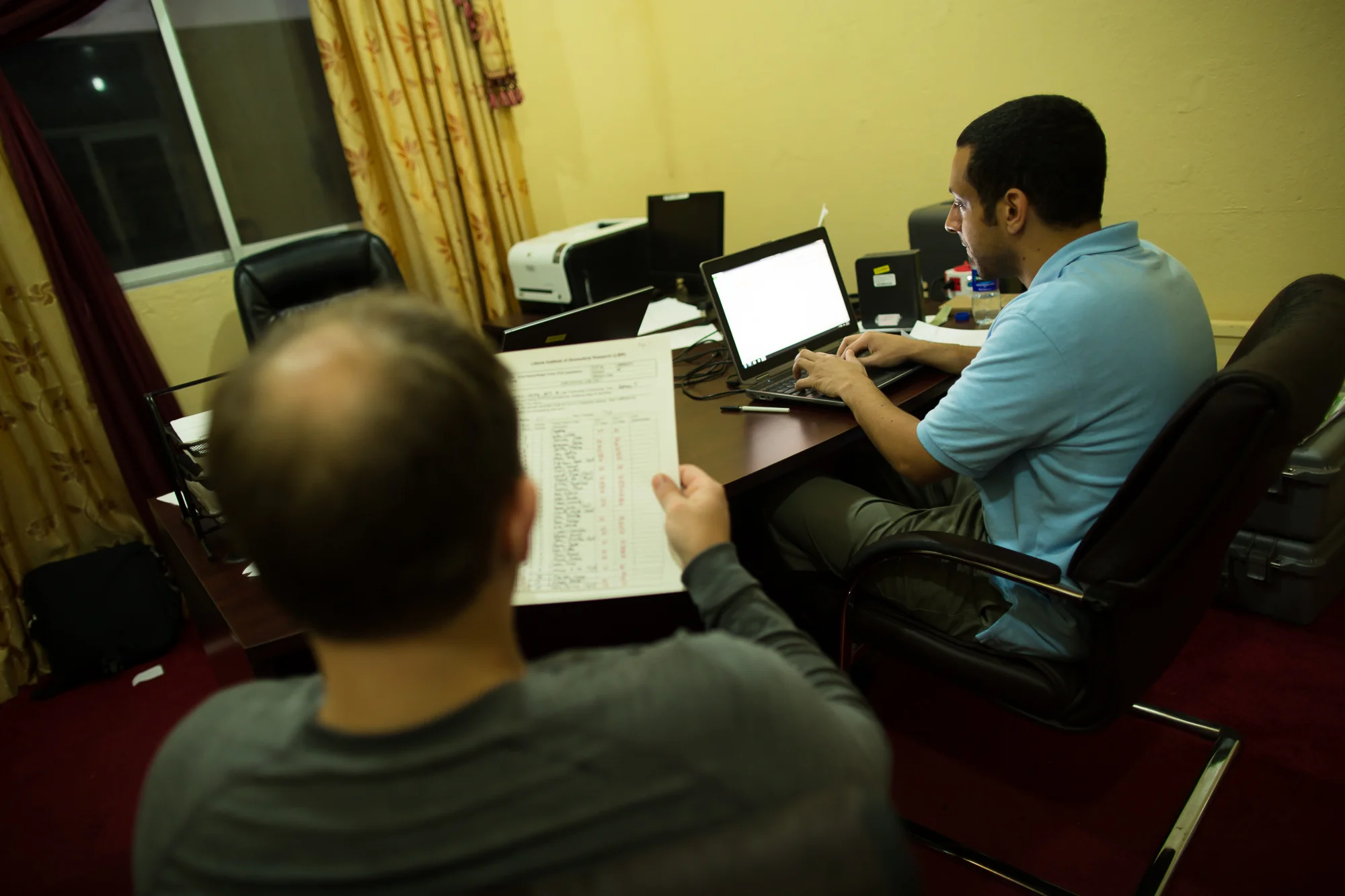
Harbel, Liberia - September 26, 2014: Dr. Jason Kindrachuk (left) and Microbiologist, Dr. Anthony Jones (right) spend four to eight hours of their day in protective space-like suits in a laboratory containment suite preparing samples from potential Ebola patients. As the light fades outside, they face the hardest part of their day. After changing back into normal clothes, one reads the list of names of specimens tested that day as the other records the information into a spreadsheet. Each name read aloud is followed by “positive” or “negative.” “That’s when it gets real,” says Dr. Kindrachuk. Fifty to sixty percent are positive. Photo by Morgana Wingard
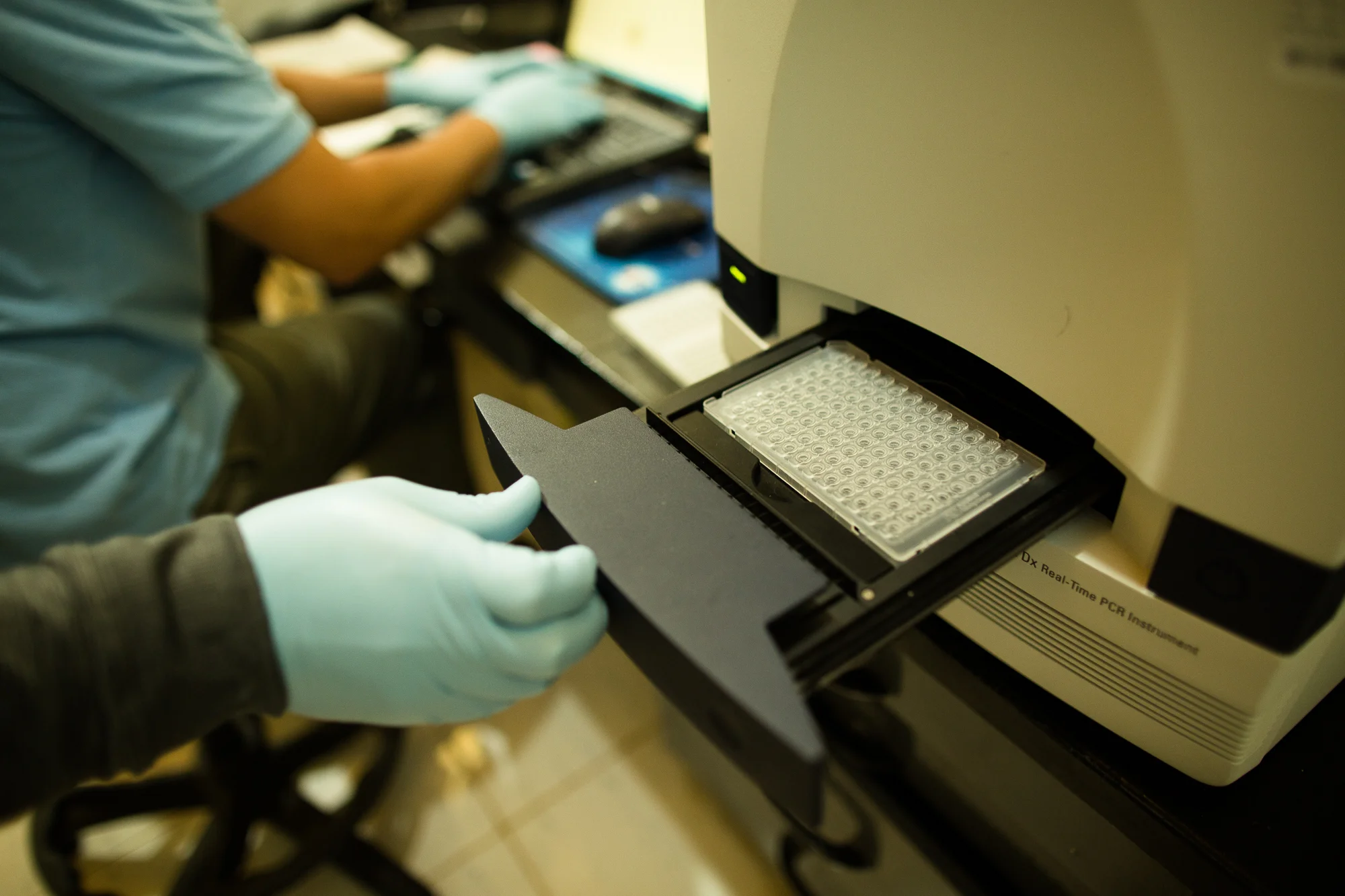
Harbel, Liberia - September 26, 2014: Dr. Jason Kindrachuck inserts the DNA from 47 people into a Polymerase Chain Reaction (PCR) machine to determine if they test positive for Ebola. This machine can test up to 100 samples of human DNA at a time. Photo by Morgana Wingard
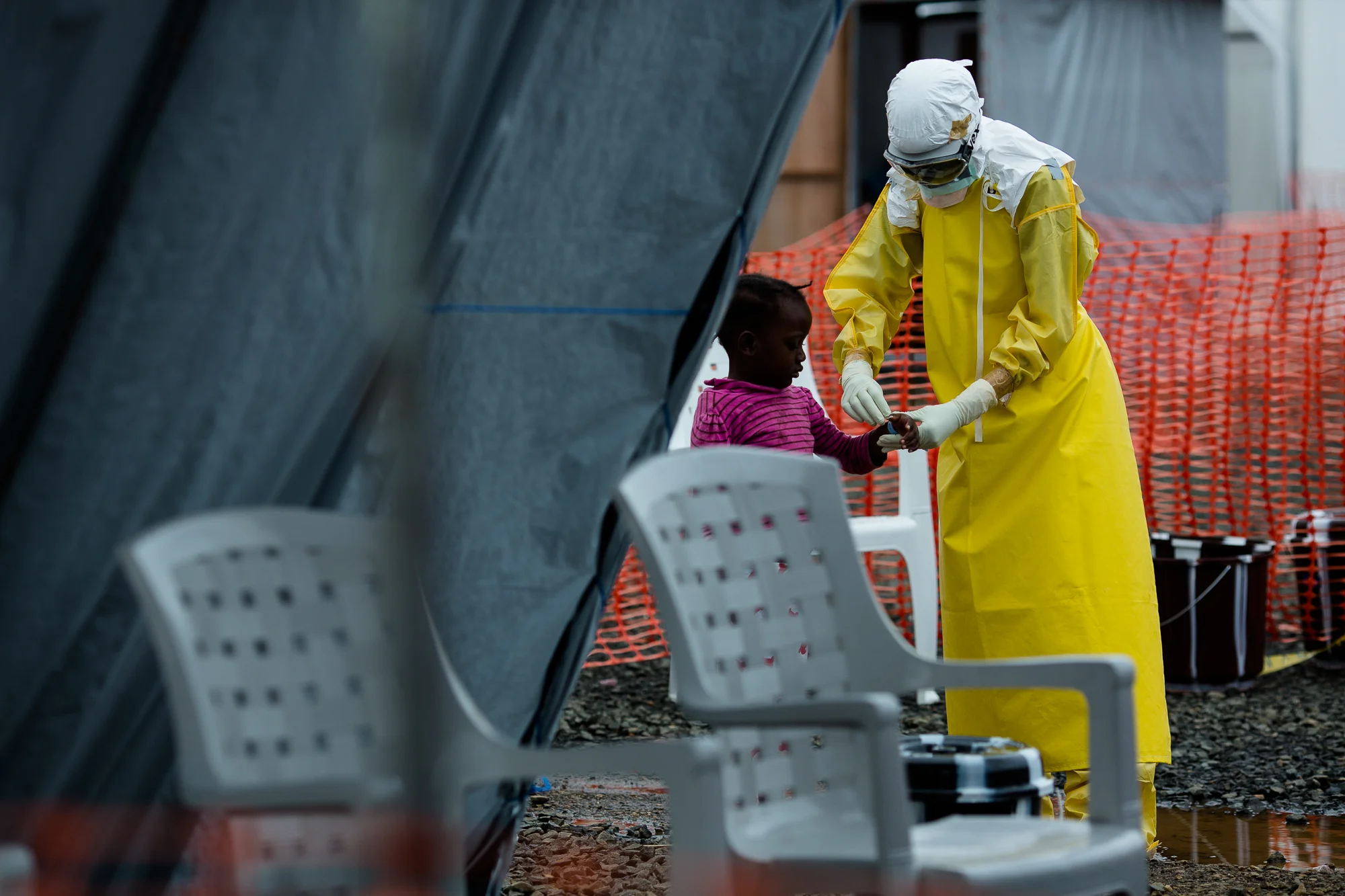
Monrovia, Liberia - Aug 33, 2014: An Doctors Without Borders (MSF) staff member in the triage unit, admits a young girl who arrived at ELWA 3 in an ambulance by herself. ELWA 3 is the Ebola treatment unit in Monrovia run by MSF. Photo by Morgana Wingard
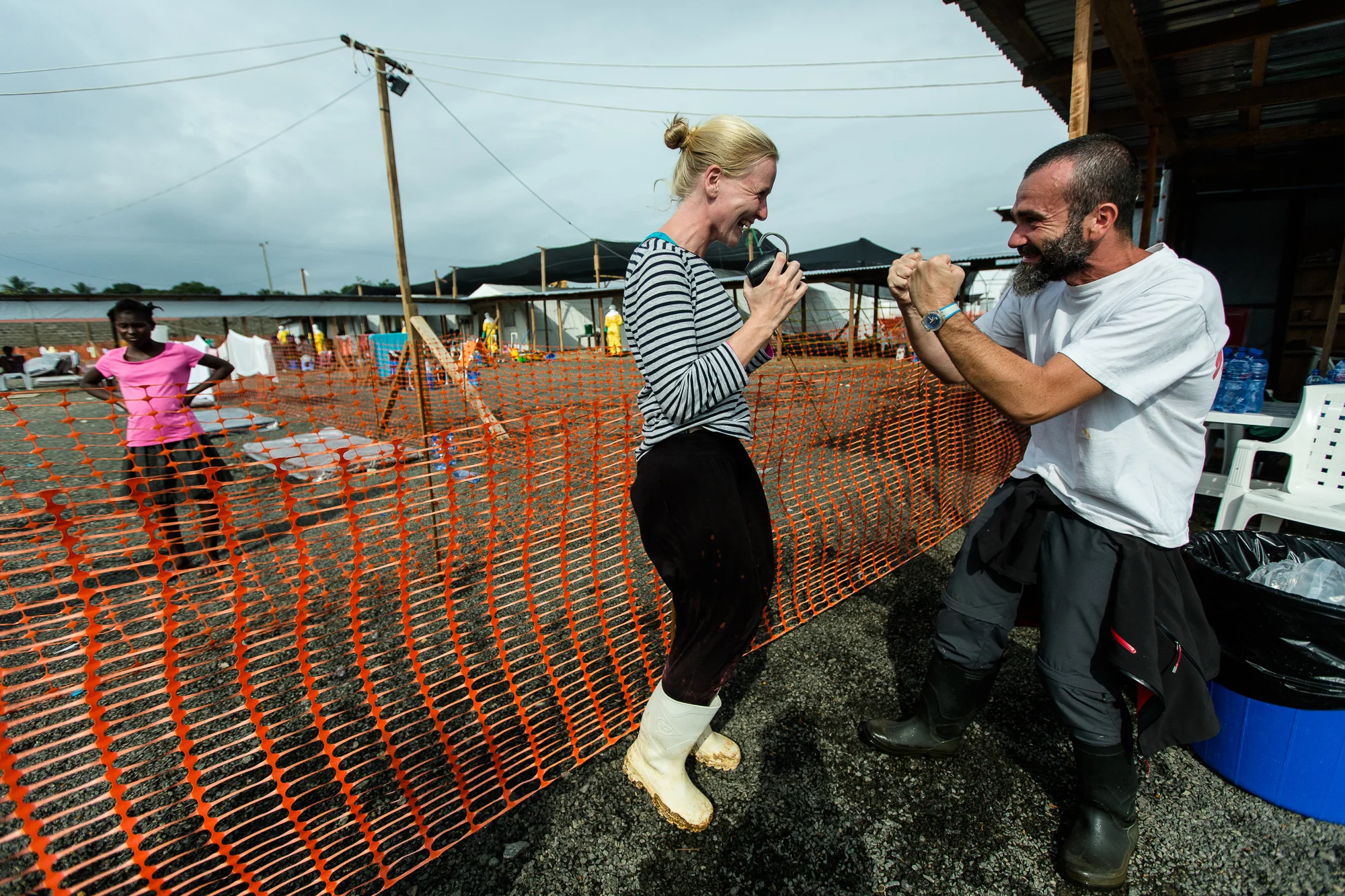
Monrovia, Liberia - Aug 33, 2014: Sissel Overvoll and Dr. Roberto Scaini jump for joy as eight patients prepare to be released from ELWA 3—the Ebola treatment unit run by Doctors Without Borders in Monrovia. Photo by Morgana Wingard
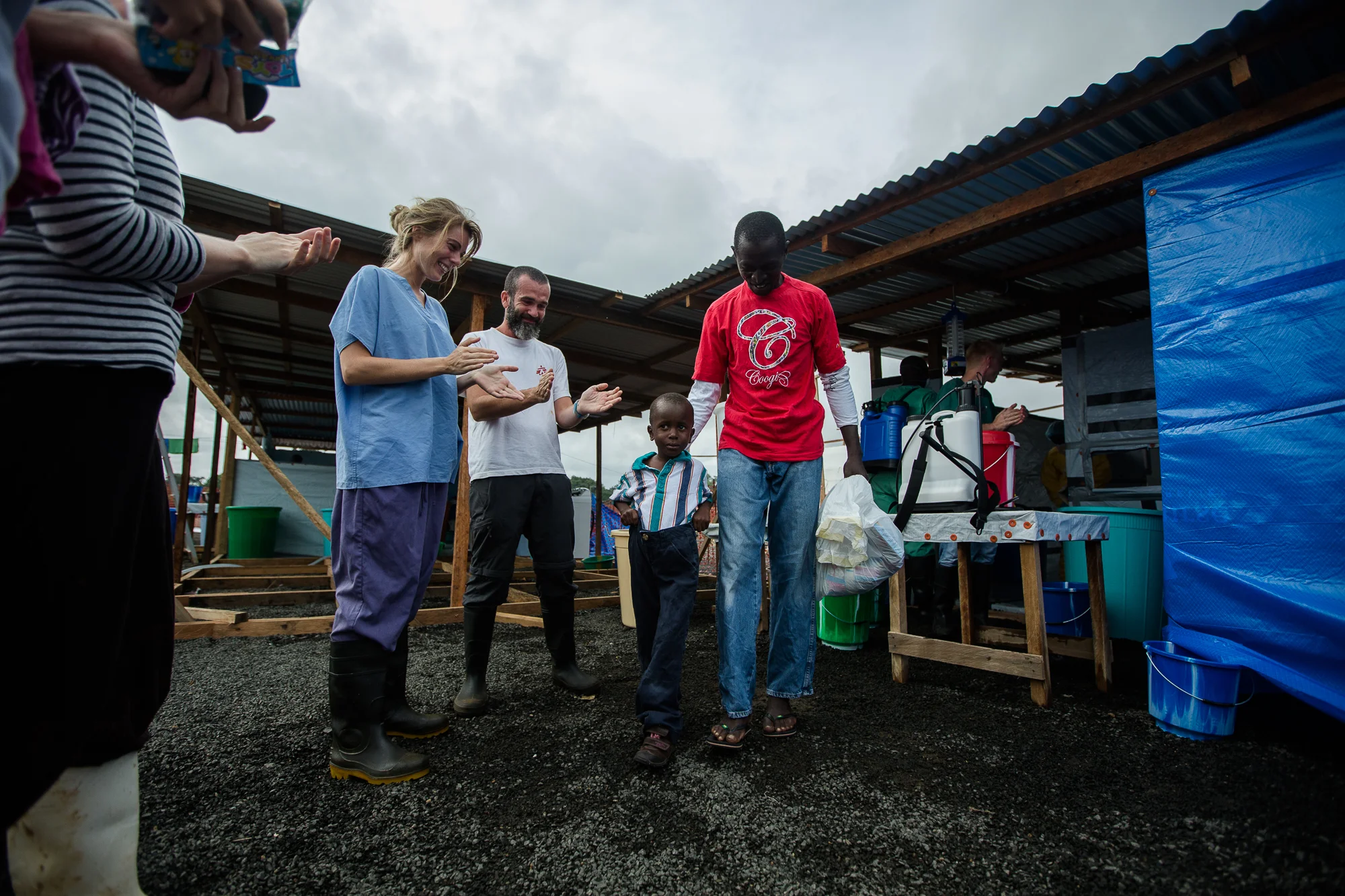
Monrovia, Liberia - Aug 31, 2014: William Poopei (40) and Patrick Poopei (6) walk out of the isolation unit at ELWA 3—the Ebola treatment unit run by Doctors Without Borders (MSF). William and Patrick (father and son) are both survivors of Ebola. Photo by Morgana Wingard
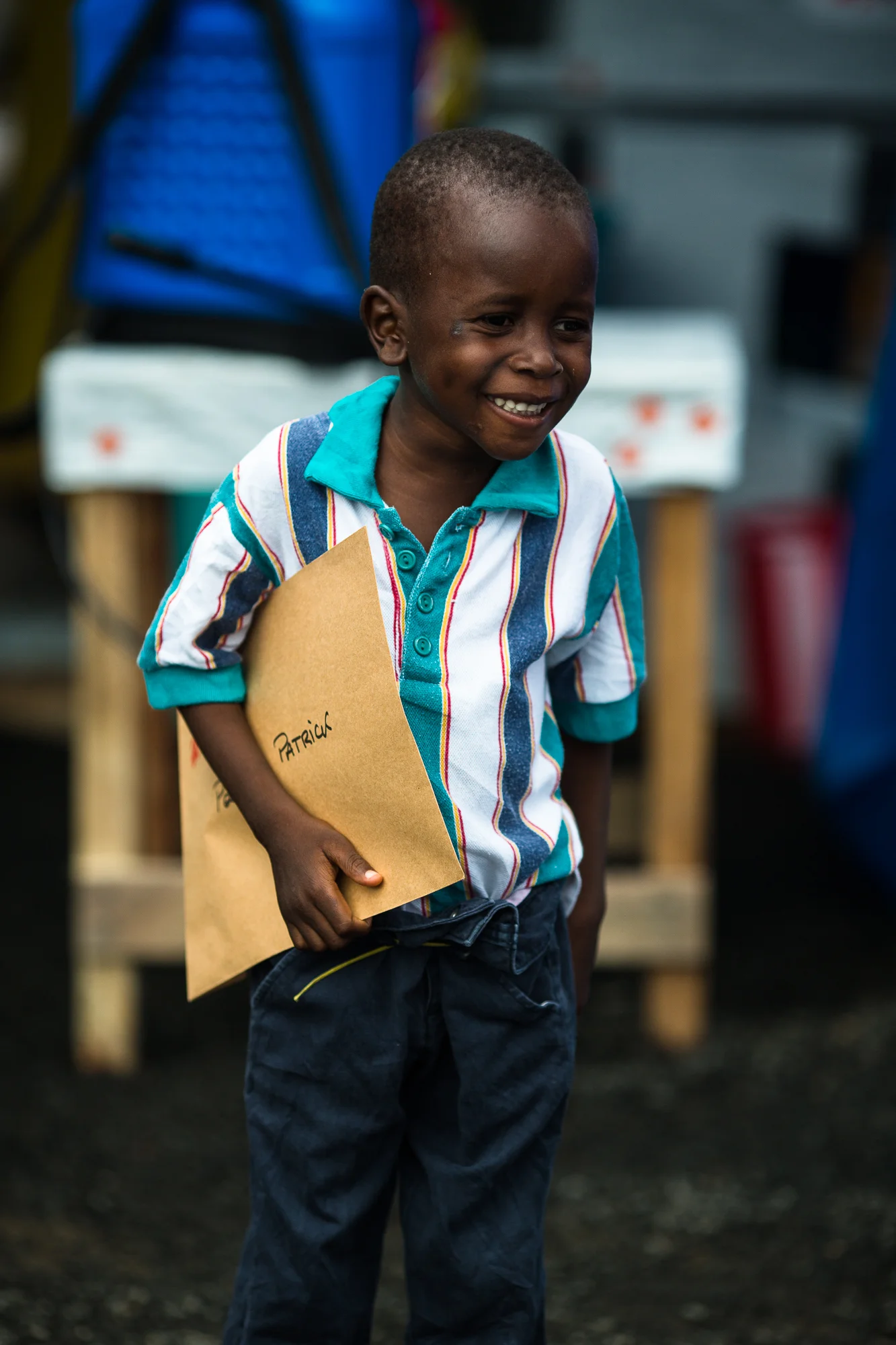
Monrovia, Liberia - Aug 31, 2014: Patrick Poopei (6) holds his certificate that he is Ebola free. Patrick and his father were both released from ELWA 3—the Ebola treatment unit run by Doctors Without Borders (MSF). Photo by Morgana Wingard
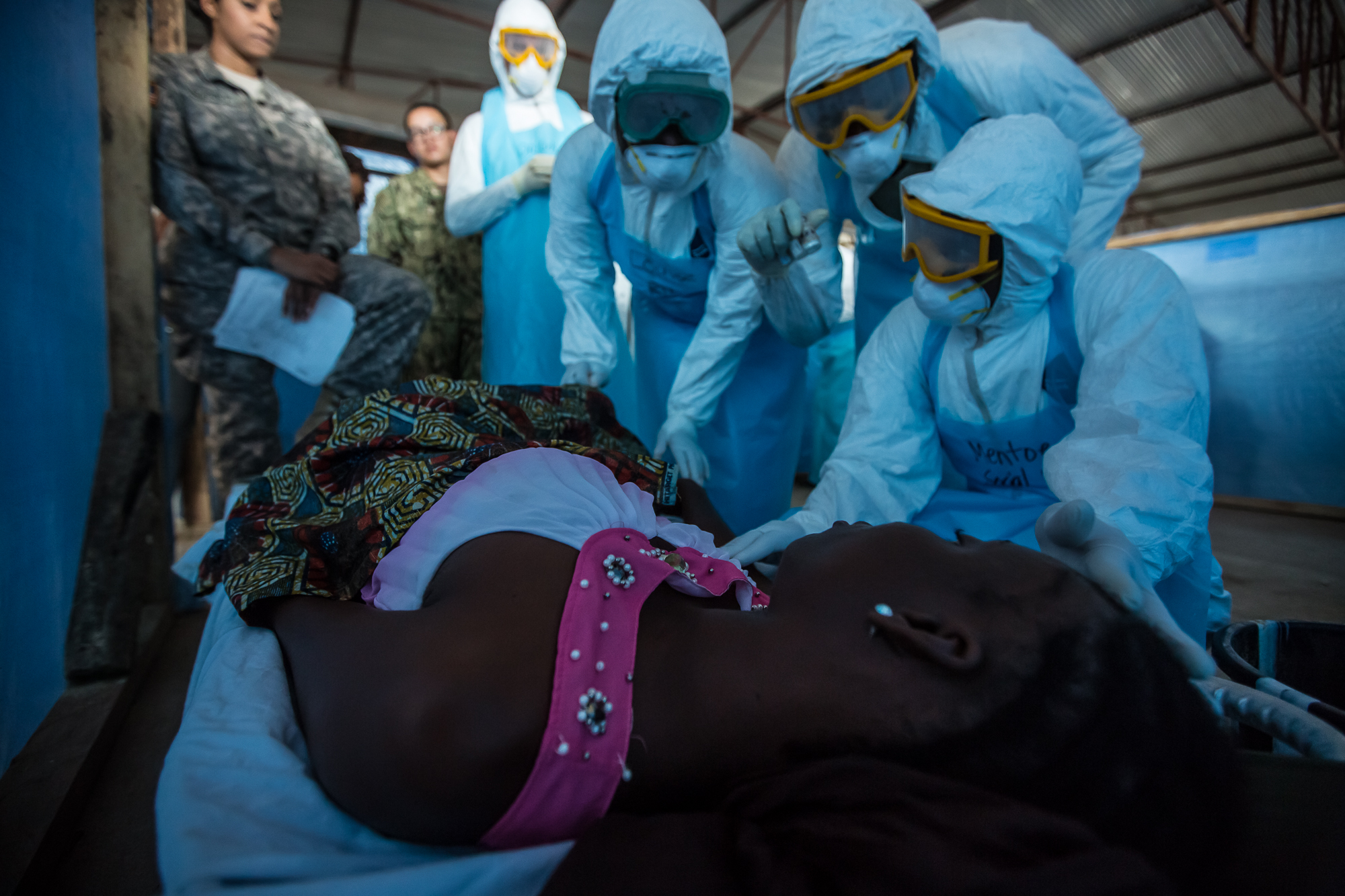
Monrovia, Liberia - December 5, 2014: Ebola survivor, Josephine Karwah, acts as an Ebola patient during a training session run by the U.S. Armed Forces at the Liberian National Police station in Paynesville to prepare healthcare workers to go into Ebola treatment units. Photo by Morgana Wingard